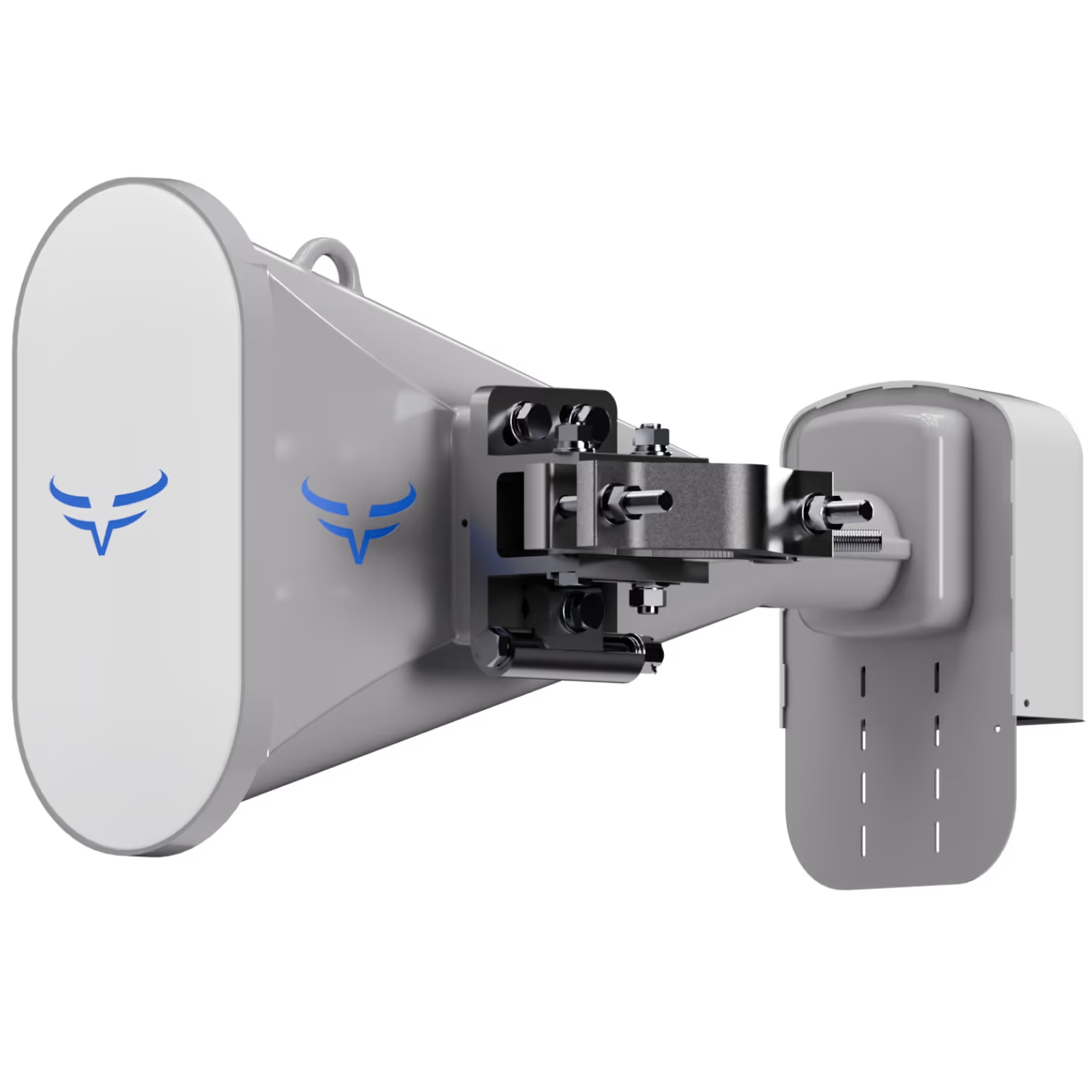
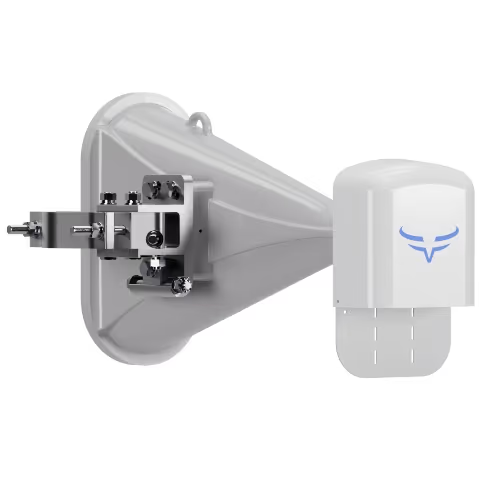
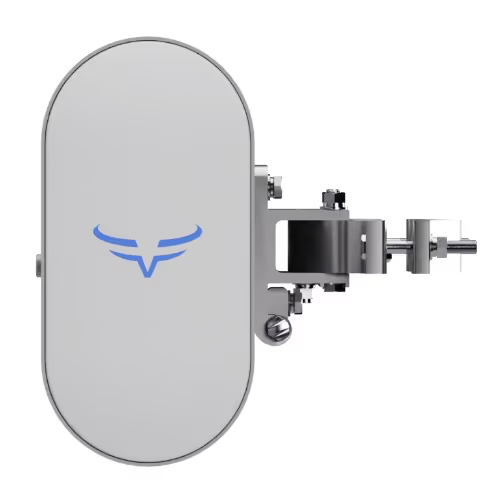
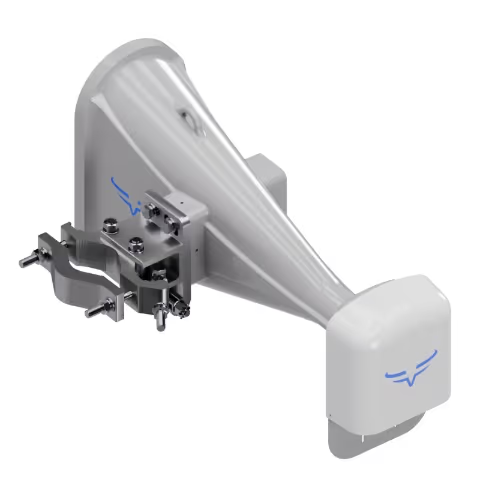
Overview
A 30° horn antenna is a highly directional radio antenna that concentrates wireless coverage into a narrow 30° sector. By focusing RF energy into a tight, predictable beam pattern, it helps reduce signal bleed into neighboring sectors, improves noise rejection, and enables more efficient frequency reuse. This makes 30° horn antennas especially useful for wireless internet service providers (WISPs) and system integrators building point-to-multipoint (PtMP) networks in noisy or subscriber-dense environments.
The Wideband 6 GHz Asymmetrical 30° Horn Antenna is designed to help WISPs scale their networks and deliver better service by dividing traditional 90° or 120° sectors into multiple focused 30° horn sectors. Smaller sectors concentrate signal energy where it is needed, reduce the amount of noise and interference picked up by the access point, and decrease the number of subscriber stations sharing each AP. With fewer stations per sector, each subscriber receives more airtime, and customers are more likely to be positioned near the center of the beam, where signal strength is highest and chain balance is strongest.
This makes the WB6-A30 ideal for sector splitting, AB channel planning, and frequency reuse. Its sharply defined 30° beam pattern helps WISPs add capacity, improve modulation rates, reduce interference, and create cleaner, more predictable PtMP coverage from crowded tower sites.
Industry-leading RF performanceWith industry-leading gain and antenna efficiency, the WB6-A30 enhances network reliability, improves signal strength, supports higher modulation rates, and helps deliver faster subscriber speeds. Its future-ready wideband design supports the full 5 and 6 GHz bands, making the WB6-A30 ready for upcoming Wi-Fi 6E AX and Wi-Fi 7 BE technologies. This helps WISPs stay ahead of network demand, improve service quality, and remain competitive as customer bandwidth needs continue to grow.
Faster, more reliable WISP serviceService providers using the WB6-A30 can see immediate improvements in network performance. Subscribers benefit from stronger, more consistent connections with fewer interruptions, even in challenging RF environments.
This added reliability helps WISPs deliver higher speeds, reduce support calls, and build a reputation for dependable service that keeps customers satisfied and loyal.
More successful customer installationsThe WB6-A30 helps make installations smoother and more predictable. Its precise coverage pattern and reduced interference help minimize signal issues during setup, leading to faster and more successful customer installs.
Fewer installation problems mean fewer repeat visits, lower support costs, and greater customer confidence from the start.
Radio and antenna compatibilityDirect replacement many legacy antennasWISP antenna compatibility is primarily determined by frequency range, connector type, polarization, and intended application. The IsoHorns WB6-A30 operates from 4.9–7.2 GHz, uses two RP-SMA pigtails, supports dual-polarized V/H operation, and is commonly used as a 30° WISP sector horn antenna.
The WB6-A30 is a direct replacement for many legacy 5 GHz horn antennas and typically outperforms mass-market horn antennas by about 3 dBi.
One key difference between IsoHorns gain ratings and those of many other WISP horn manufacturers is that IsoHorns publishes measured gain from mass-produced antenna models. Many other manufacturers rely on nominal gain, computer-modeled gain, or measurements taken from prototypes.
The IsoHorns Wideband 6 GHz Asymmetrical 30° Horn Antenna is a direct replacement for the following antennas:
• Ubiquiti airPRISM 3x30° HD Sector (AP-5AC-90-HD)*
• Ubiquiti airMAX PrismStation 5 GHz 30° Horn (Horn-5-30)**
• Ubiquiti airMAX ac 30° Beamwidth Sector Isolation Antenna Horn / older naming (PrismAP-5-30)**
• Ubiquiti UISP Horn Antenna (UISP-Horn)
• RF Elements Symmetrical Horn TP Antenna Gen2 (HG3-TP-S30)
• RF Elements 30° Symmetrical Beam Antenna / Symmetrical Horn CC Antenna Gen2 (HG3-CC-S30)
• RF Elements Symmetrical Horn Antenna 5-30 (SH-TP-5-30)
• RF Elements 30° Asymmetrical Horn TP Antenna (HG3-TP-A20-30)
• RF Elements 30° Asymmetrical Beam Antenna (HG3-CC-A30)
• Cyber Antennas 30° Symmetrical Horn (S30)
• Cyber Antennas 20–30° Asymmetrical Horn (A20)
• RF Elements 30° Asymmetrical Horn TP (AH2030-TP)
• RF Elements 30° Asymmetrical Horn CC (AH30-CC)
• RF Elements 30° Symmetrical Horn WB (SH30WB)
• RF Elements 30° Symmetrical Horn HG4 TwistPort (HG4-TP-S30)
• RF Elements 30° Symmetrical Horn HG4 Connectorized (HG4-CC-S30)
• RF Elements StarterHorn 30° USMA (STH-30-USMA)
* One WB6-A30 replaces one 30° sector, and three WB6-A30 horns replace the 3x30° sector antenna.
** Requires an equivalent Rocket Prism AC Gen2 radio with RP-SMA connectors.
Radio CompatibilityRadio compatibility is primarily determined by frequency range, connector type, number of spatial streams, and intended application. The IsoHorns WB6-A30 operates from 4.9–7.2 GHz, uses two RP-SMA pigtails, and supports dual-polarized V/H operation for 2x2 MIMO.
It is commonly used in 30° WISP sector deployments where focused PtMP coverage is required.
The WB6-A30 is commonly paired with radios from Ubiquiti, Cambium, and Mimosa. These platforms are popular in WISP networks because they support PtMP operation, TDMA-based access protocols, and, on GPS-capable models, synchronization for clustering multiple horn antennas on the same tower.
Common compatible radios include:
• Cambium ePMP 3000L
• Cambium ePMP 4500L
• Cambium ePMP 4600L
• Ubiquiti Rocket Prism AC Gen2
• Ubiquiti Rocket AC Lite
• Ubiquiti Rocket LTU
• Mimosa A5x
Designed to Solve Common WISP ChallengesInterference in Noisy RF EnvironmentsThe WB6-A30's narrow 30° beam pattern and excellent front-to-back performance help reduce interference from neighboring sectors and unwanted signals, improving network reliability and signal quality.
Limited Sector CapacityBroad sectors can force too many subscribers to share the same airtime. By dividing coverage into multiple 30° sectors, operators can increase capacity and serve more subscribers more efficiently.
Poor Frequency ReuseThe controlled 30° coverage pattern minimizes overlap between sectors, making it easier to reuse frequencies across a tower site and maximize available spectrum.
Migration to 6 GHz NetworksWith wideband 4.9-7.2 GHz coverage, the WB6-A30 supports both 5 GHz and 6 GHz radios, allowing operators to upgrade to newer technologies without replacing antennas.
Expanding Capacity Without New Tower InfrastructureThe WB6-A30 enables operators to add additional sectors and increase network capacity on existing towers, reducing the need for new sites and additional infrastructure investments.
Typical Use CasesHigh-Density WISP Tower SitesWhen many subscribers are concentrated in a relatively small geographic area, a 30° sector allows operators to split coverage into multiple narrow sectors rather than using broad 90° or 120° sectors. This increases capacity and lets more customers share the tower efficiently.
Long, Narrow Coverage CorridorsA 30° sector is well suited for areas where subscribers are concentrated in a specific direction, such as highways, valleys, coastlines, industrial parks, or suburban growth corridors. Instead of radiating energy into unused areas, the antenna focuses coverage where customers are located.
Capacity Expansion on Existing TowersWISPs can increase network capacity by replacing broad sectors with multiple 30° sectors. This approach reduces the number of subscribers sharing each access point and allows operators to expand network capacity without constructing new tower sites.
High-Performance Wi-Fi 6E and Wi-Fi 7 NetworksWith wideband 4.9-7.2 GHz coverage, the WB6-A30 supports modern fixed wireless equipment operating in both the 5 GHz and 6 GHz bands, making it suitable for next-generation Wi-Fi 6E and Wi-Fi 7 deployments.
Who Is the WB6-A30 Horn Designed For?The WB6-A30 is ideal for:
• Wireless Internet Service Providers (WISPs)
• Rural broadband providers
• Fixed wireless network operators
• Network integrators deploying point-to-multipoint (PtMP) infrastructure
• Service providers upgrading or expanding into 6 GHz networks
What Sets the WB6-A30 Apart from Similar Products in the IndustryCompared to similar 30° horn antennas in the industry, the WB6-A30 combines true wideband 4.9-7.2 GHz coverage, excellent RF isolation, and future-ready compatibility in a single platform. While many competing products are designed primarily for the 5 GHz band or require proprietary adapter systems, the WB6-A30 supports both 5 GHz and 6 GHz deployments, integrates easily with modern connectorized radios, and is engineered to help WISPs build cleaner, higher-capacity point-to-multipoint networks.
True Wideband OperationMost competing 30° horns were originally designed around the 5 GHz band. The WB6-A30 covers 4.9-7.2 GHz, allowing operators to deploy both current 5 GHz equipment and newer 6 GHz radios on the same antenna infrastructure.
Ready for Modern 6 GHz RadiosThe WB6-A30 is optimized for today's wideband platforms such as Ubiquiti Wave MLO6 and Cambium ePMP 4600, eliminating the need to replace antennas when migrating to higher-capacity 6 GHz networks.
Better Interference RejectionWith approximately 40 dB front-to-back ratio and greater than 35 dB port isolation, the WB6-A30 is engineered to minimize sector overlap and reduce unwanted RF energy, helping maintain higher modulation rates and more reliable subscriber performance.
Simplified InstallationUnlike some competing horn antennas that rely on proprietary adapter systems, the WB6-A30 includes RP-SMA pigtails, making it easier to integrate with a variety of connectorized radios.
Designed for Capacity GrowthThe narrow 30° beam enables WISPs to divide a tower into more sectors, increasing airtime efficiency and allowing more subscribers to be served without expanding tower infrastructure.
Frequently Asked QuestionsWhat is the WB6-A30 designed for?The WB6-A30 is a high-gain 30° asymmetrical horn antenna designed for point-to-multipoint (PtMP) wireless networks. It helps WISPs improve coverage, increase network capacity, reduce interference, and deliver faster, more reliable internet service.
What frequency range does the WB6-A30 support?The WB6-A30 operates across the entire 4.9–7.2 GHz range, covering 4.9 GHz public safety deployments, 5 GHz wireless broadband, 6 GHz Wi-Fi 6E, and future Wi-Fi 7 applications.
Which radios are compatible with the WB6-A30?The WB6-A30 is compatible with many popular connectorized radios, including:
• Cambium ePMP 3000L
• Cambium ePMP 4500L
• Cambium ePMP 4600L
• Ubiquiti Rocket Prism AC Gen2
• Ubiquiti Rocket AC Lite
• Ubiquiti Rocket LTU
• Mimosa A5x
The antenna includes RP-SMA male pigtails for easy integration.
Why choose a 30° horn antenna?A 30° beamwidth provides highly focused coverage, making it ideal for high-density deployments where minimizing interference and maximizing frequency reuse are important. It also allows operators to divide coverage into multiple narrow sectors, increasing network capacity and supporting more subscribers per tower.
Does the WB6-A30 help reduce interference?Yes. The WB6-A30's narrow beam pattern and excellent front-to-back performance help reduce interference from neighboring sectors and unwanted signals, improving network reliability and signal quality.
Is the WB6-A30 suitable for high-density tower sites?Yes. The WB6-A30 is well suited for high-density tower sites where many subscribers are concentrated in a relatively small geographic area. Its narrow 30° coverage pattern allows operators to deploy additional sectors and increase network capacity.
Can I use the WB6-A30 with both 5 GHz and 6 GHz radios?Yes. The WB6-A30's wideband 4.9-7.2 GHz design supports both 5 GHz and 6 GHz radios, allowing operators to migrate to newer technologies without replacing antennas.
Does the WB6-A30 support Wi-Fi 6E and Wi-Fi 7?Yes. The antenna's 4.9–7.2 GHz operating range fully supports current 6 GHz deployments, including Wi-Fi 6E and emerging Wi-Fi 7 technologies.
How does the WB6-A30 help improve network capacity?By reducing interference and improving signal-to-noise ratio (SNR), the WB6-A30 helps access points maintain higher modulation rates and more efficient airtime utilization. This can allow more subscribers to be served from a single access point.
Is the WB6-A30 suitable for outdoor deployments?Yes. The antenna features an IP67 weather rating and is designed for long-term outdoor operation in harsh environmental conditions.
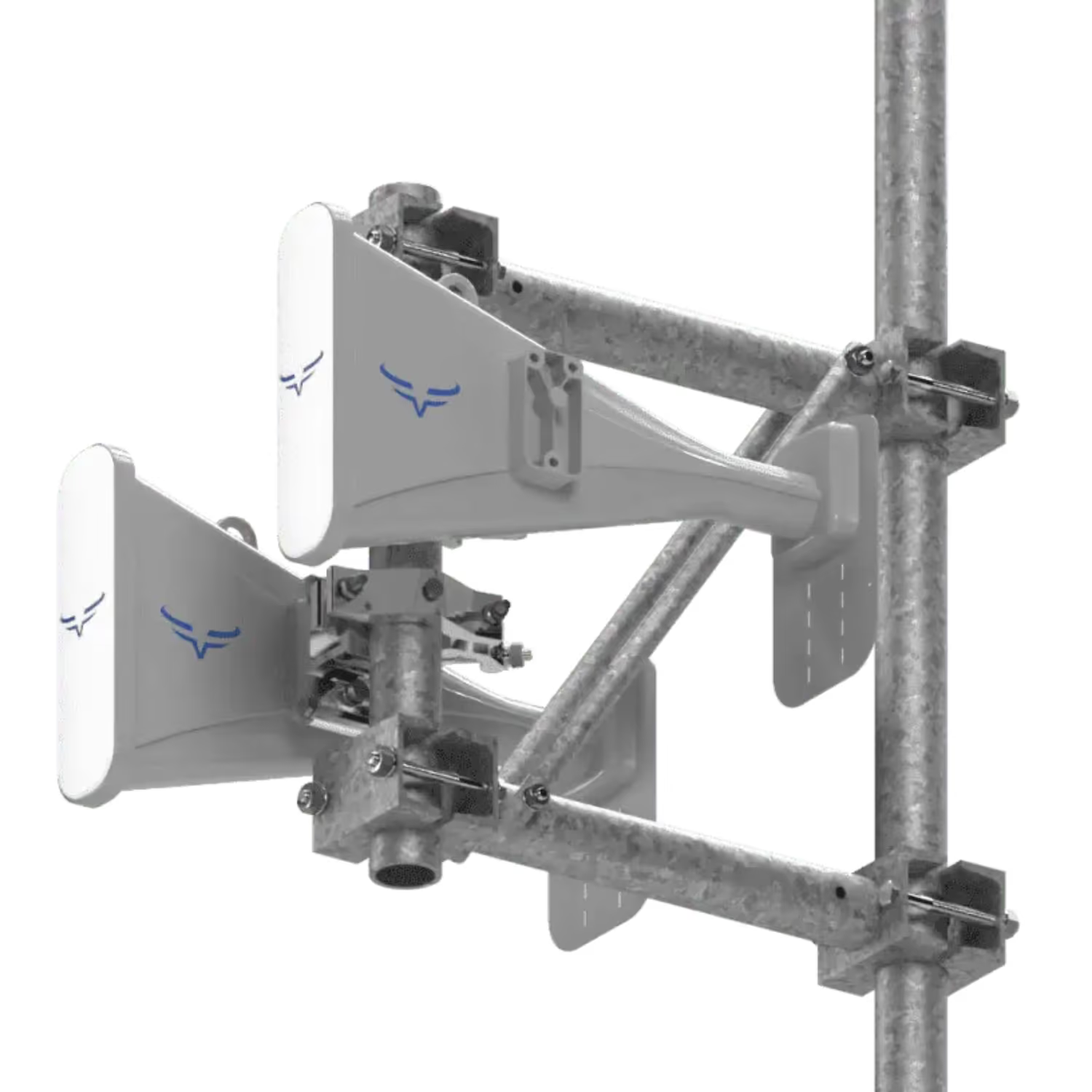
Can multiple WB6-A30 antennas be deployed on the same tower?Yes. The focused 30° beamwidth allows multiple sectors to be deployed on the same tower with improved frequency reuse and reduced sector overlap.
Related Products
No related products found.
Related Products (Category & Subcategory)

Reviews
Loading…
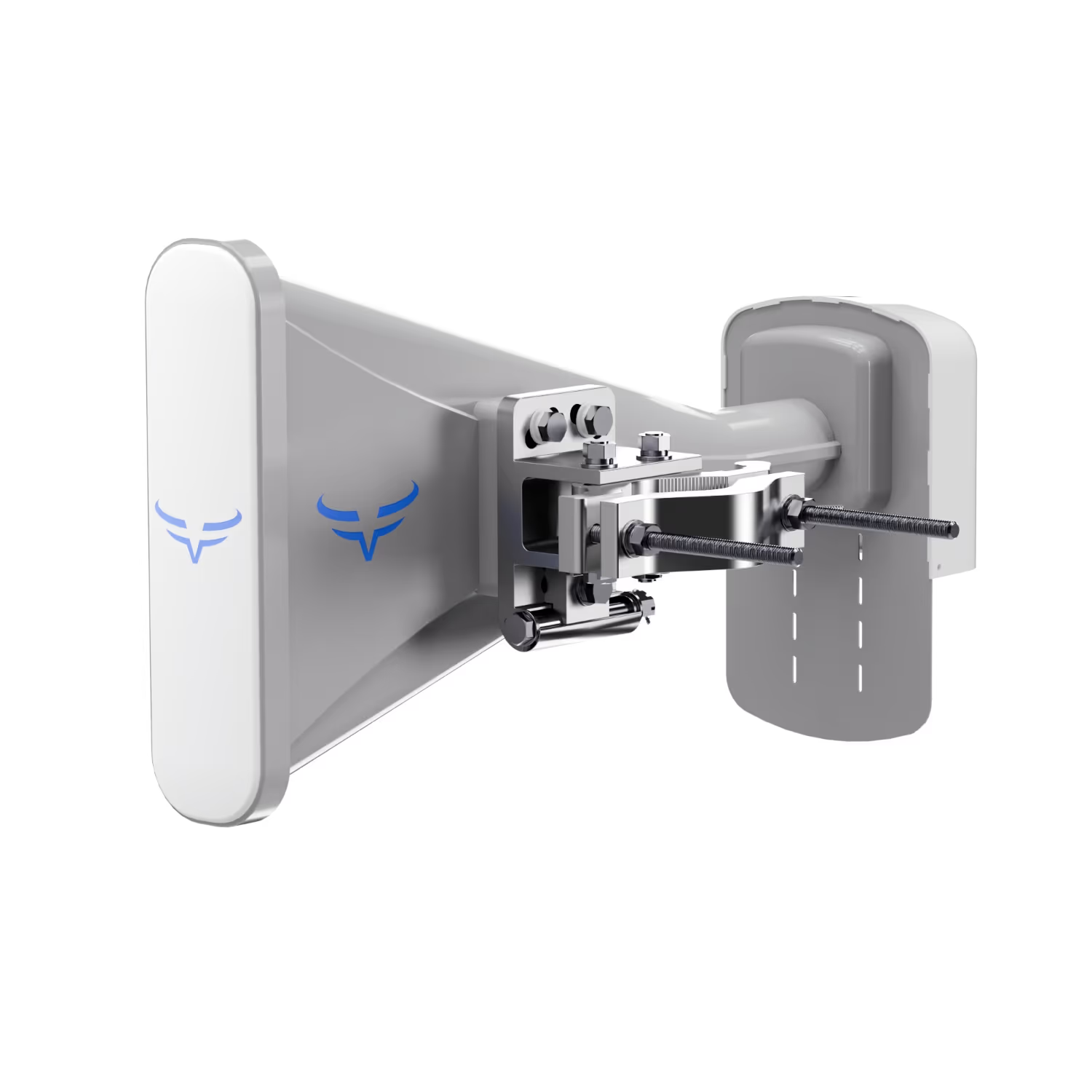
Wideband 6 GHz Asymmetrical 30° Horn Antenna
Model Number: WB6-A30
Login to add to cart
$399.00
High-gain 30° horn sector antenna supports 5 GHz and 6 GHz WISP point-to-multipoint (PtMP) access points from Ubiquiti, Cambium, and Mimosa.
Features
- Azimuth beamwidth: 30°
- Frequency range: 4.9-7.2 GHz
- Gain: 18.5-21 dBi
- Port isolation: >35 dB
- VSWR: <1.6
- Front-to-back ratio: 40 dB
- Polarization: Dual-Linear (H/V) 2x2 MIMO
- Connectors: RP-SMA male pigtails (included)
- Weather rating: IP67
- Ubiquiti compatibility: Wave-MLO5, Wave-MLO6, RP-5AC-Gen2, LTU-Rocket
- Cambium compatibility: ePMP 3000L, ePMP 4500L, ePMP 4600L
Shipping Specifications
- •Dimensions (L×W×H): 590×400×220
- •Weight: 6.92kg
Warehouse availability
Los Angeles
In stock
35 available