Overview
Details
The 5 GHz band is one of the most commonly used wireless frequencies in the WISP industry because it offers the ideal balance of speed, capacity, and reliability for fixed wireless broadband deployments. Compared to the crowded 2.4 GHz spectrum, 5 GHz provides significantly more non-overlapping channels, lower interference levels, and support for wider channel widths such as 40 MHz, 80 MHz, and 160 MHz. This allows WISPs to deliver faster subscriber speeds, lower latency, and more stable connections for services like HD video streaming, VoIP, cloud applications, online gaming, and business internet access. The band is widely deployed for both Point-to-Point (PtP) backhaul links between towers and Point-to-Multipoint (PtMP) access networks that connect subscribers across rural, suburban, and urban environments.
One of the biggest advantages of 5 GHz for WISPs is its ability to operate efficiently in dense RF environments where interference can severely impact network performance. Because the band has more available spectrum than 2.4 GHz, WISPs can perform better channel planning and reduce self-interference between sectors and nearby towers. To further improve performance, many operators use high-performance antennas such as horn antennas, sector antennas, and high-gain dish antennas, which help increase RF isolation, improve signal quality, and maximize usable network capacity. Modern 5 GHz equipment from manufacturers like Cambium Networks and Ubiquiti also supports advanced technologies that improve throughput and spectrum efficiency for large-scale deployments.
Despite its advantages, 5 GHz does have limitations. Higher-frequency signals do not travel as far as lower-frequency bands and are more easily weakened by trees, buildings, rain, and other physical obstructions. This makes clear line-of-sight especially important for long-distance links. Some portions of the 5 GHz spectrum also require Dynamic Frequency Selection (DFS), which forces radios to change channels if radar systems are detected. Even with these challenges, 5 GHz remains one of the most reliable and cost-effective solutions for WISPs because it provides the performance needed to support growing subscriber demand while remaining widely available and affordable for network expansion.
Related Products
Filter by tags
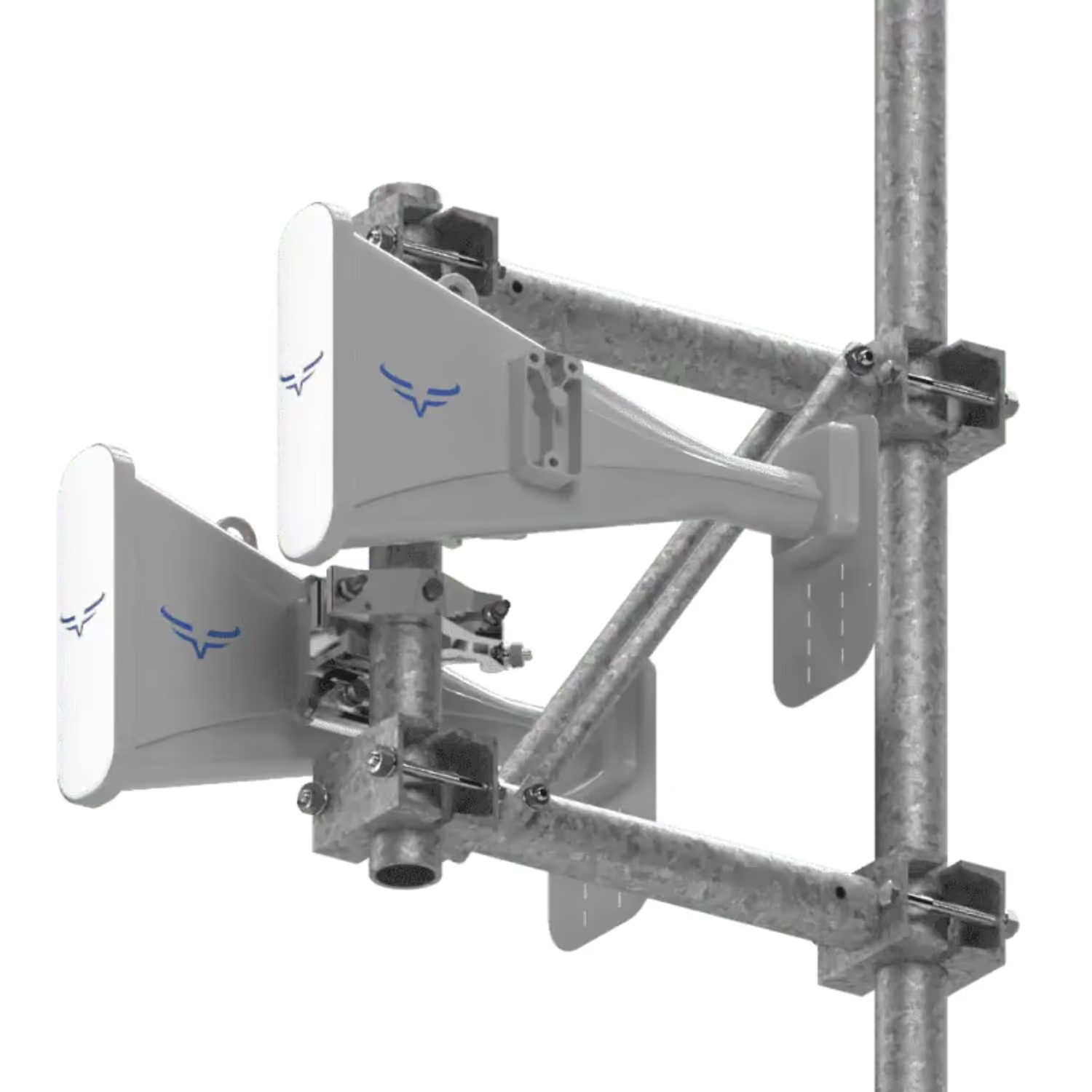
4x4 Double Horn Antenna
Two wideband asymmetrical 90° horn antennas and a stand off mount.
$799.00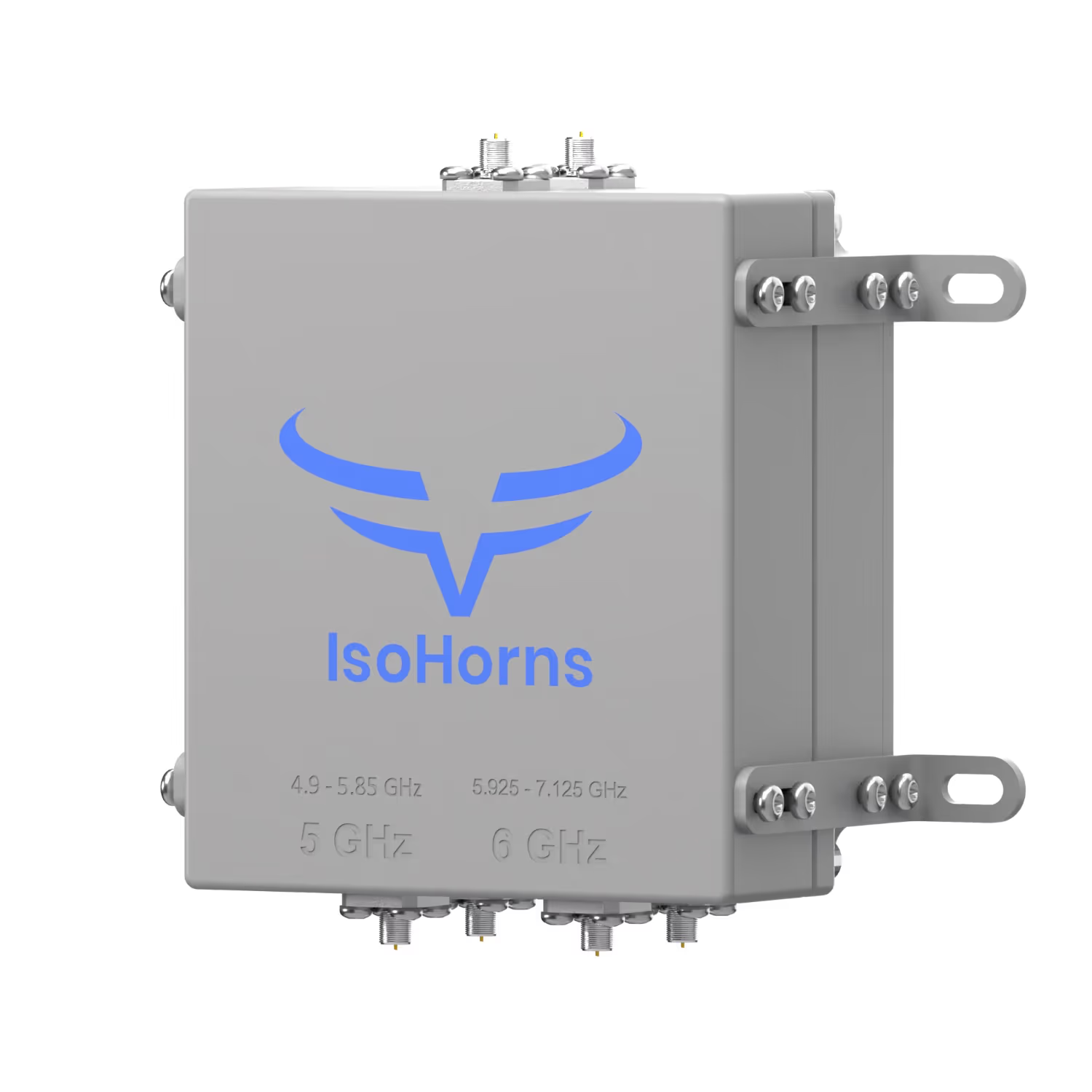
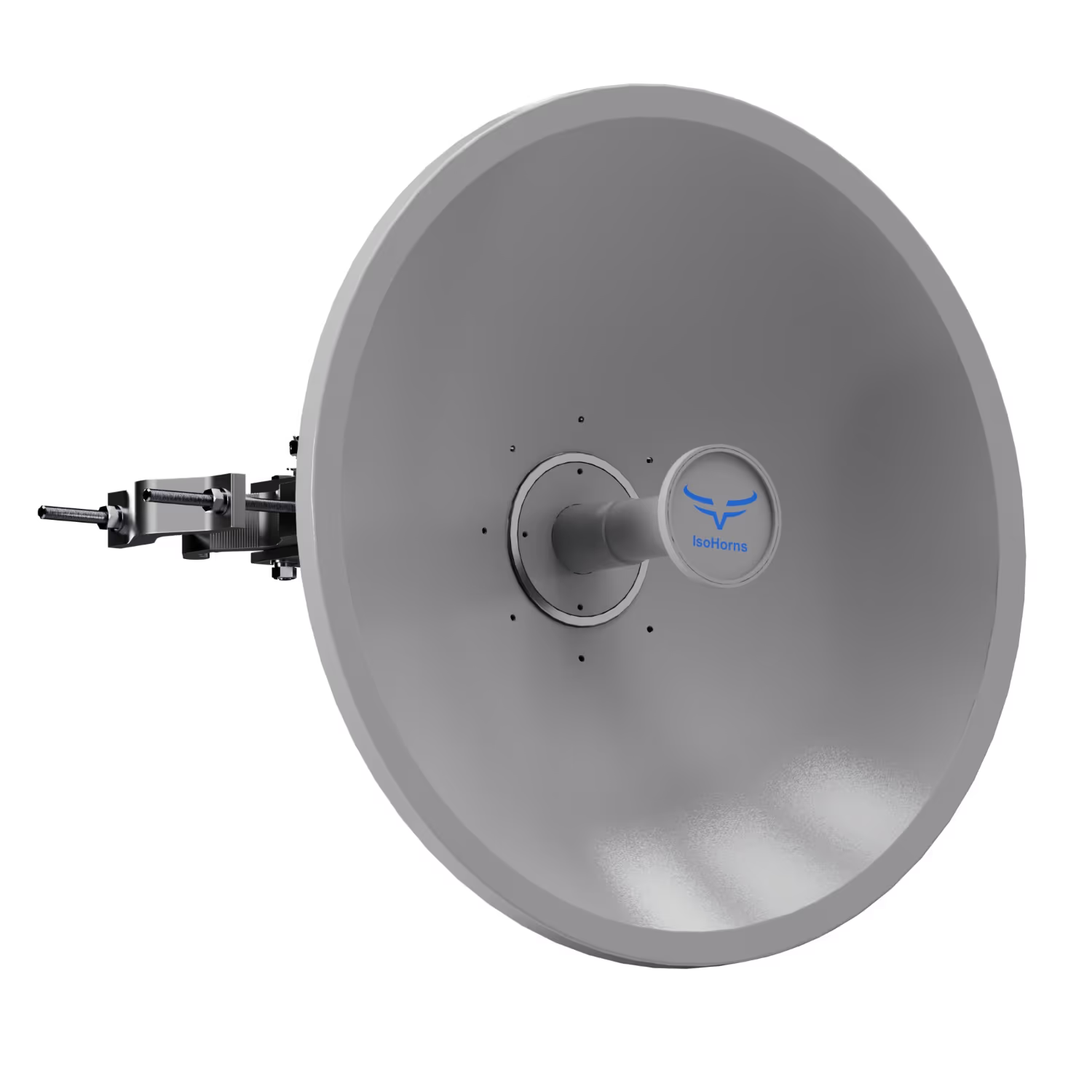
IsoDish 2-Pack
High-performance Wideband 6 GHz 0.6 m (2 ft) IsoDish Antenna 2-pack for Ubiquiti Wave MLO6 PtP wireless bridge relays, long-distance ePMP Force 4600c PtMP clients, WISP subscriber installations, and cost-effective 5 GHz and 6 GHz CPE deployments.
$399.00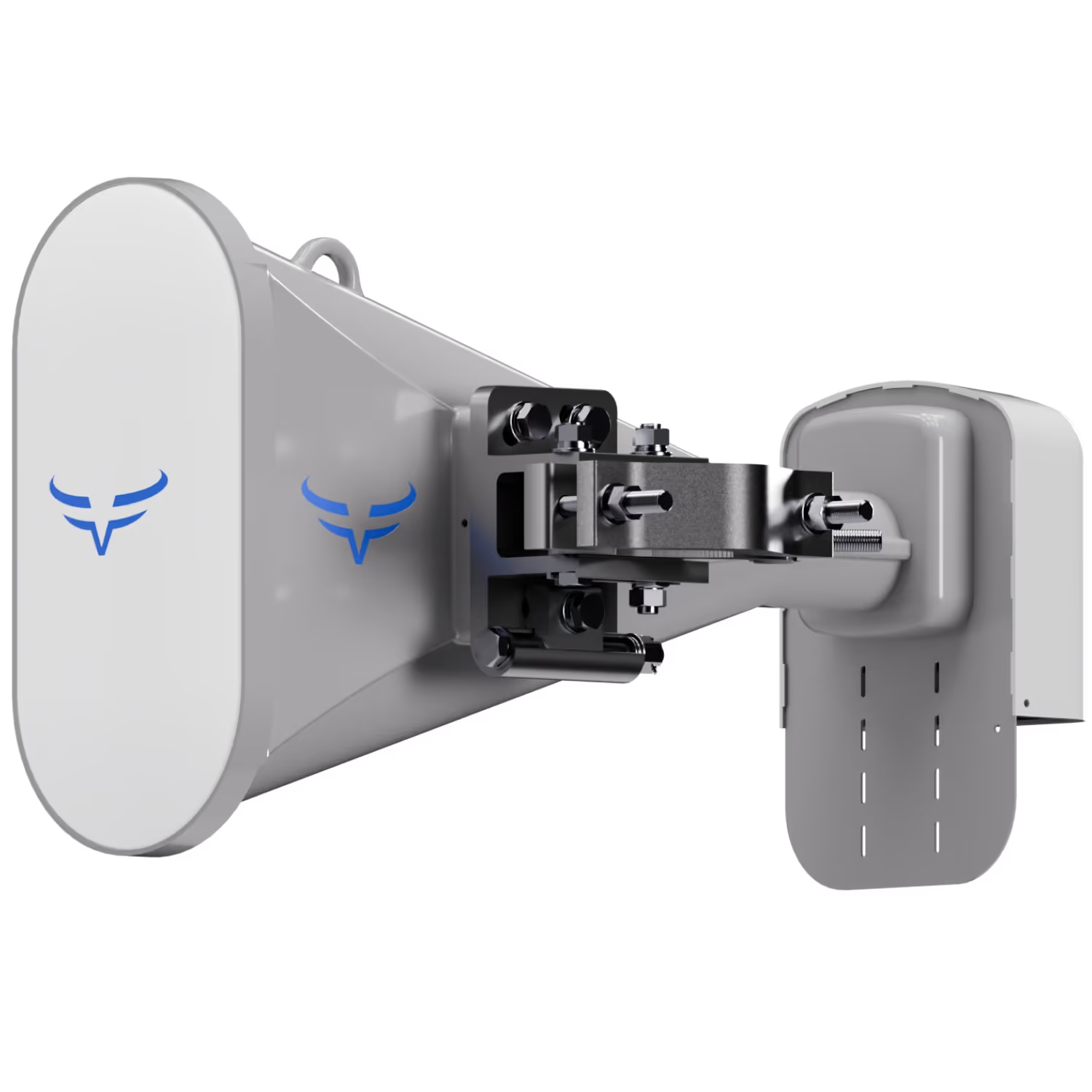
Wideband 6 GHz Asymmetrical 30° Horn Antenna
High-gain 30° horn sector antenna supports 5 GHz and 6 GHz WISP point-to-multipoint (PtMP) access points from Ubiquiti, Cambium, and Mimosa.
$399.00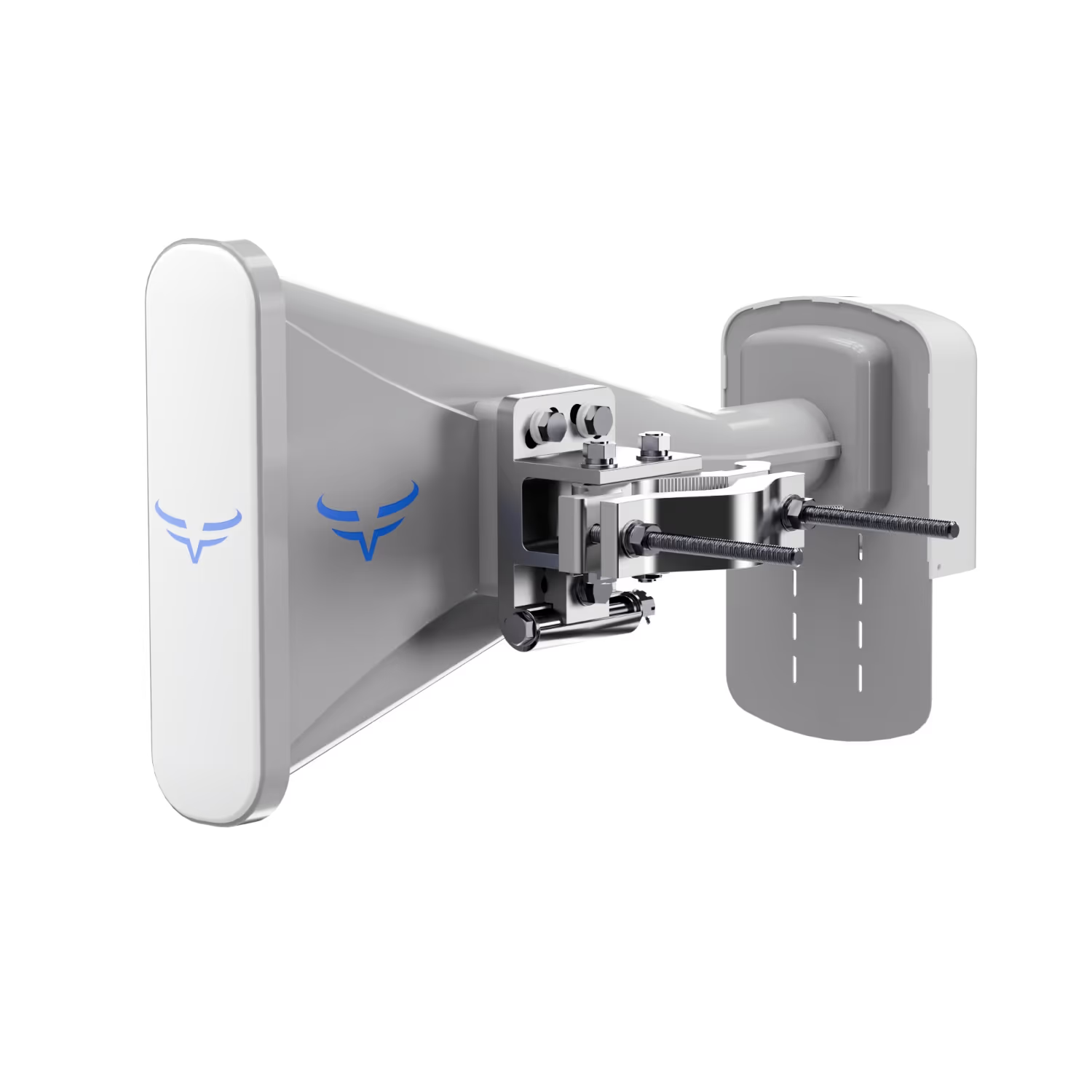
Wideband 6 GHz Asymmetrical 90° Horn Antenna
High-gain 90° horn sector antenna supports 5 GHz and 6 GHz WISP point-to-multipoint (PtMP) access points from Ubiquiti, Cambium, and Mimosa.
$399.00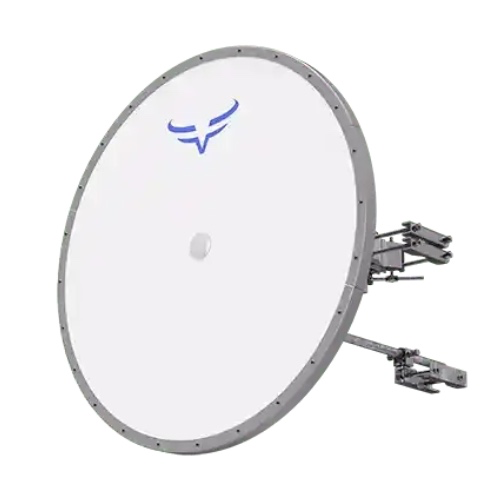
Wideband 6 GHz Backhaul 900 mm (3 ft) Deep Dish Antenna
High-gain 4.9–7.2 GHz 900 mm deep dish backhaul antenna for long-range 10–20 km PTP wireless bridges, Wi-Fi 6E, Wi-Fi 7 MLO, Ubiquiti Wave MLO5/6, Cambium ePMP Force 4600c, and WISP backhaul deployments.
$799.00