Descripción general
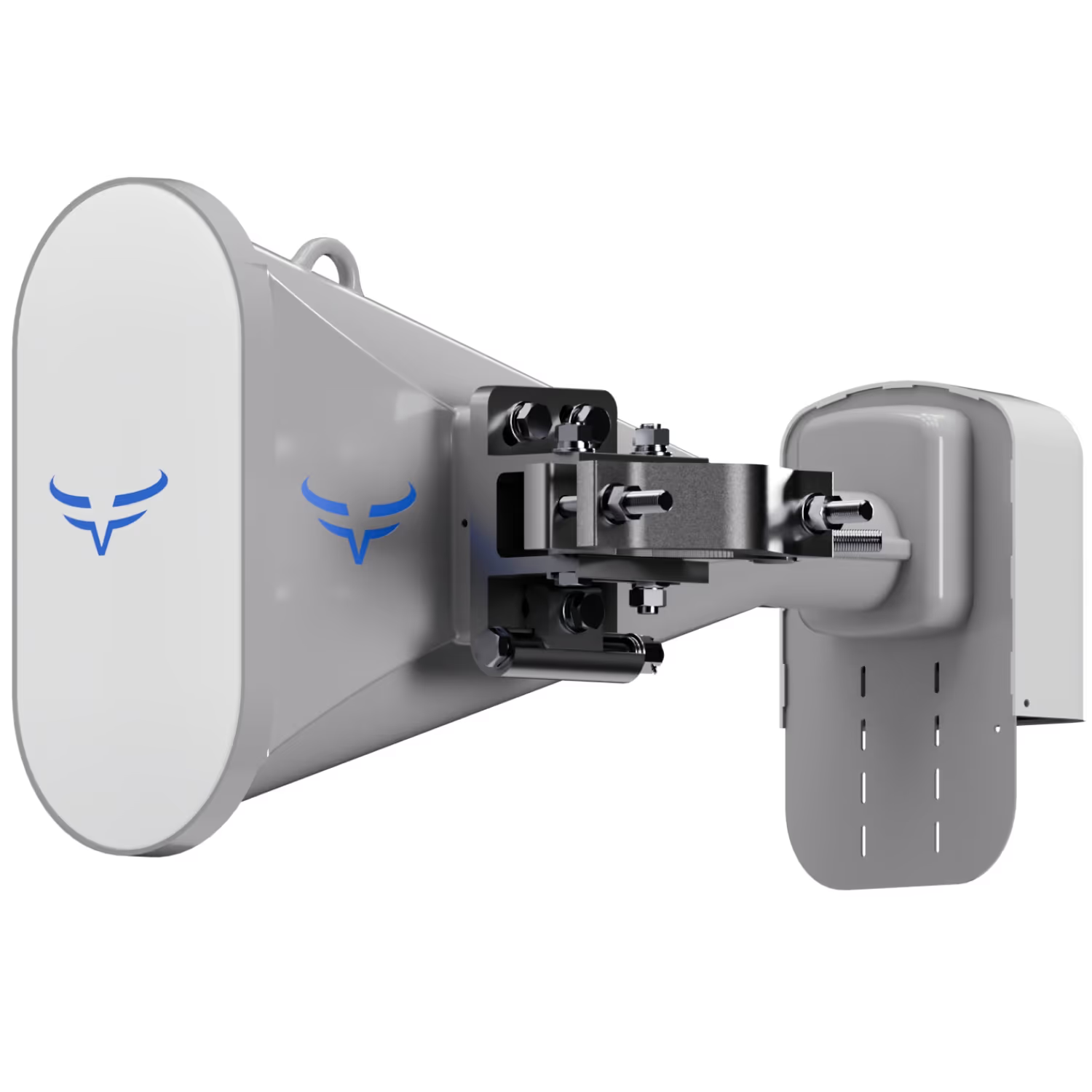
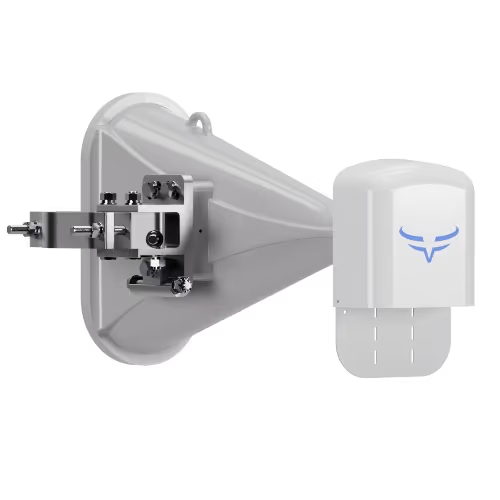
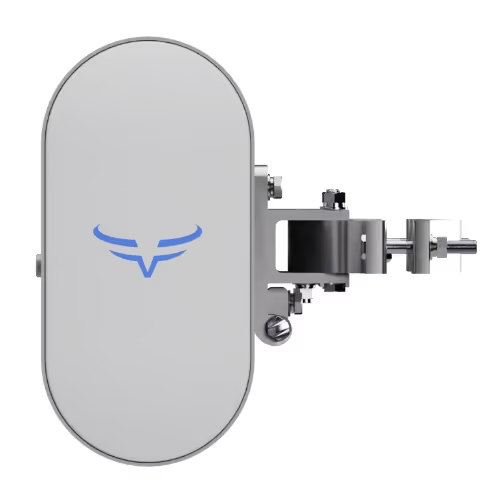
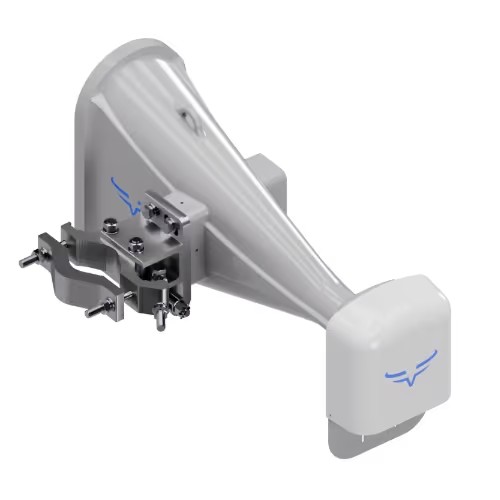
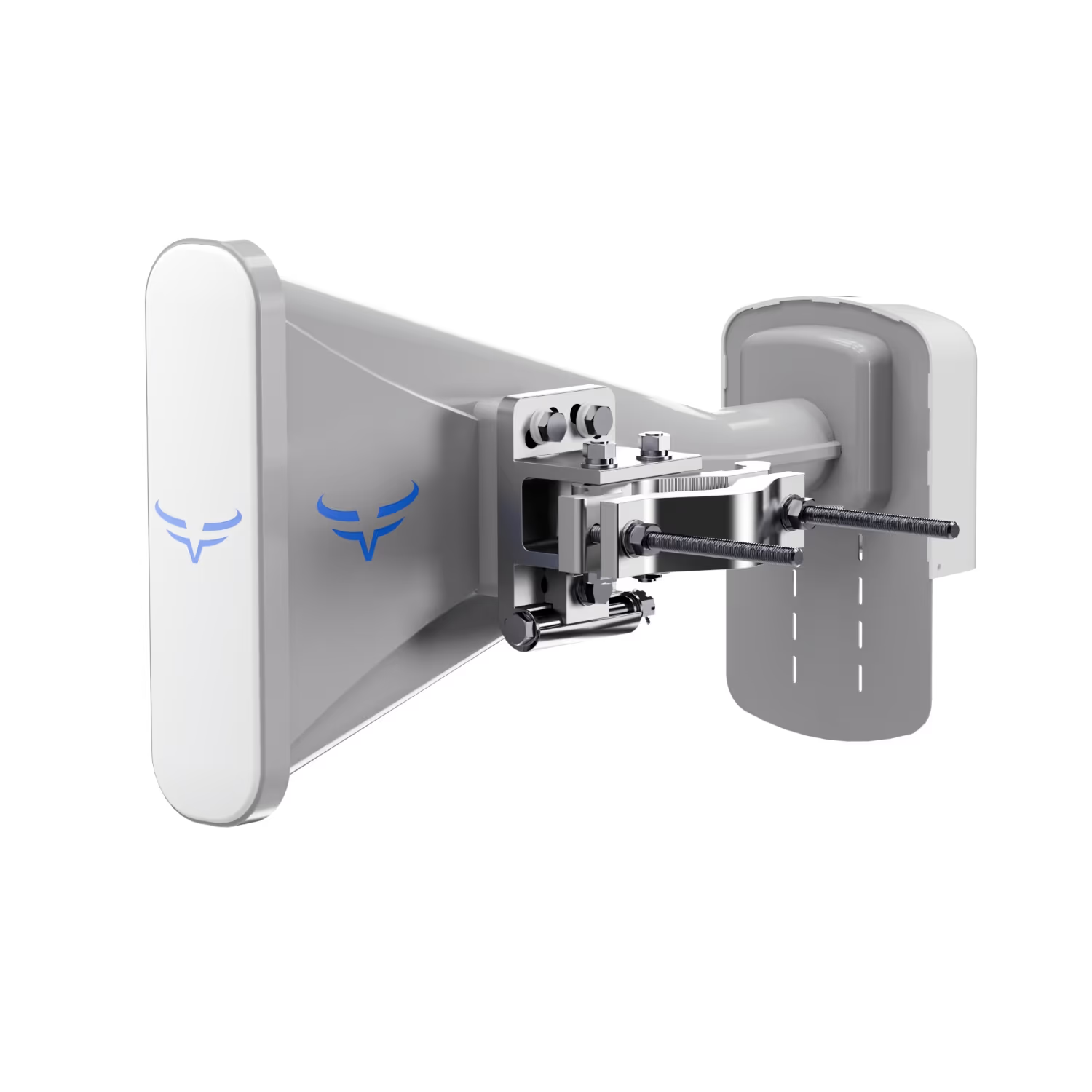
Una antena de bocina de 30° es una antena de radio altamente direccional que concentra la cobertura inalámbrica en un sector estrecho de 30°. Al enfocar la energía de radiofrecuencia en un haz preciso y predecible, ayuda a reducir la dispersión de la señal en sectores vecinos, mejora la supresión de ruido y permite una reutilización de frecuencia más eficiente. Esto hace que las antenas de bocina de 30° sean especialmente útiles para los proveedores de servicios de internet inalámbrico (WISP) y los integradores de sistemas que construyen redes punto a multipunto (PtMP) en entornos ruidosos o con alta densidad de usuarios.
La antena de bocina asimétrica de 30° de banda ancha de 6 GHz está diseñada para ayudar a los WISP a escalar sus redes y ofrecer un mejor servicio, dividiendo los sectores tradicionales de 90° o 120° en múltiples sectores de bocina de 30° enfocados. Los sectores más pequeños concentran la energía de la señal donde se necesita, reducen la cantidad de ruido e interferencia captada por el punto de acceso y disminuyen el número de estaciones de usuario que comparten cada AP. Con menos estaciones por sector, cada abonado recibe más tiempo de transmisión y es más probable que los clientes se ubiquen cerca del centro del haz, donde la intensidad de la señal es máxima y el equilibrio de la cadena es óptimo.
Esto hace que la WB6-A30 sea ideal para la división de sectores, la planificación de canales AB y la reutilización de frecuencias. Su patrón de haz de 30°, nítido y definido, ayuda a los proveedores de servicios de internet inalámbrico (WISP) a aumentar la capacidad, mejorar las tasas de modulación, reducir las interferencias y crear una cobertura punto a multipunto (PtMP) más limpia y predecible en emplazamientos con torres de transmisión congestionadas.
Rendimiento de RF líder en la industria Con una ganancia y eficiencia de antena líderes en la industria, el WB6-A30 mejora la fiabilidad de la red, optimiza la intensidad de la señal, admite mayores velocidades de modulación y contribuye a ofrecer velocidades de abonado más rápidas. Su diseño de banda ancha, preparado para el futuro, admite las bandas completas de 5 y 6 GHz, lo que permite que el WB6-A30 esté listo para las próximas tecnologías Wi-Fi 6E AX y Wi-Fi 7 BE. Esto ayuda a los proveedores de servicios de internet inalámbrico (WISP) a anticiparse a la demanda de la red, mejorar la calidad del servicio y mantener su competitividad a medida que aumentan las necesidades de ancho de banda de los clientes.
Servicio WISP más rápido y fiable Los proveedores de servicios que utilizan el WB6-A30 pueden observar mejoras inmediatas en el rendimiento de la red. Los suscriptores se benefician de conexiones más sólidas y consistentes, con menos interrupciones, incluso en entornos de radiofrecuencia complejos.
Esta mayor fiabilidad ayuda a los proveedores de servicios de internet inalámbrico (WISP) a ofrecer velocidades más altas, reducir las llamadas de soporte y forjarse una reputación de servicio fiable que mantiene a los clientes satisfechos y fieles.
Instalaciones de clientes más exitosas El WB6-A30 facilita instalaciones más sencillas y predecibles. Su patrón de cobertura preciso y la reducción de interferencias minimizan los problemas de señal durante la configuración, lo que se traduce en instalaciones más rápidas y exitosas para los clientes.
Menos problemas de instalación significan menos visitas repetidas, menores costos de soporte y una mayor confianza del cliente desde el principio.
Compatibilidad con radios y antenas Sustitución directa de muchas antenas antiguas. La compatibilidad de las antenas WISP se determina principalmente por el rango de frecuencia, el tipo de conector, la polarización y la aplicación prevista. La IsoHorns WB6-A30 opera entre 4,9 y 7,2 GHz, utiliza dos cables pigtail RP-SMA, admite operación de doble polarización V/H y se usa comúnmente como antena de bocina sectorial WISP de 30°.
La WB6-A30 es un reemplazo directo para muchas antenas de bocina de 5 GHz antiguas y, por lo general, supera a las antenas de bocina del mercado masivo en aproximadamente 3 dBi.
Una diferencia clave entre las clasificaciones de ganancia de IsoHorns y las de muchos otros fabricantes de antenas WISP es que IsoHorns publica la ganancia medida en modelos de antenas de producción en masa. Muchos otros fabricantes se basan en la ganancia nominal, la ganancia modelada por computadora o mediciones tomadas de prototipos.
La antena de bocina asimétrica de 30° de banda ancha IsoHorns de 6 GHz es un reemplazo directo para las siguientes antenas:
• Ubiquiti airPRISM 3x30° HD Sector (AP-5AC-90-HD)*
• Ubiquiti airMAX PrismStation 5 GHz 30° Horn (Horn-5-30)**
• Antena de bocina con aislamiento de sector y ancho de haz de 30° Ubiquiti airMAX ac / denominación anterior (PrismAP-5-30)**
• Antena de bocina UISP de Ubiquiti (bocina UISP)
• Antena de bocina simétrica RF Elements Gen2 (HG3-TP-S30)
• Antena de haz simétrico de 30° de RF Elements / Antena de bocina simétrica CC Gen2 (HG3-CC-S30)
• Antena de bocina simétrica RF Elements 5-30 (SH-TP-5-30)
• Antena de bocina asimétrica TP de 30° de RF Elements (HG3-TP-A20-30)
• Antena de haz asimétrico de 30° de RF Elements (HG3-CC-A30)
• Antena de bocina simétrica de 30° de Cyber Antennas (S30)
• Antena Cyber Antennas de bocina asimétrica de 20–30° (A20)
• Elementos de RF Bocina asimétrica de 30° TP (AH2030-TP)
• Elementos de RF Bocina asimétrica CC de 30° (AH30-CC)
• Elementos de RF: Bocina simétrica de banda ancha de 30° (SH30WB)
• Bocina simétrica de RF Elements de 30° HG4 TwistPort (HG4-TP-S30)
• Bocina simétrica de RF de 30° HG4 con conector (HG4-CC-S30)
• Bocina de arranque RF Elements de 30° USMA (STH-30-USMA)
* Una antena WB6-A30 reemplaza un sector de 30°, y tres bocinas WB6-A30 reemplazan la antena de sector de 3x30°.
** Requiere una radio Rocket Prism AC Gen2 equivalente con conectores RP-SMA.
Compatibilidad de radio La compatibilidad de radio se determina principalmente por el rango de frecuencia, el tipo de conector, el número de flujos espaciales y la aplicación prevista. El IsoHorns WB6-A30 opera de 4,9 a 7,2 GHz, utiliza dos cables de conexión RP-SMA y admite operación V/H de doble polarización para MIMO 2x2.
Se utiliza habitualmente en despliegues de WISP de 30° donde se requiere una cobertura PtMP focalizada.
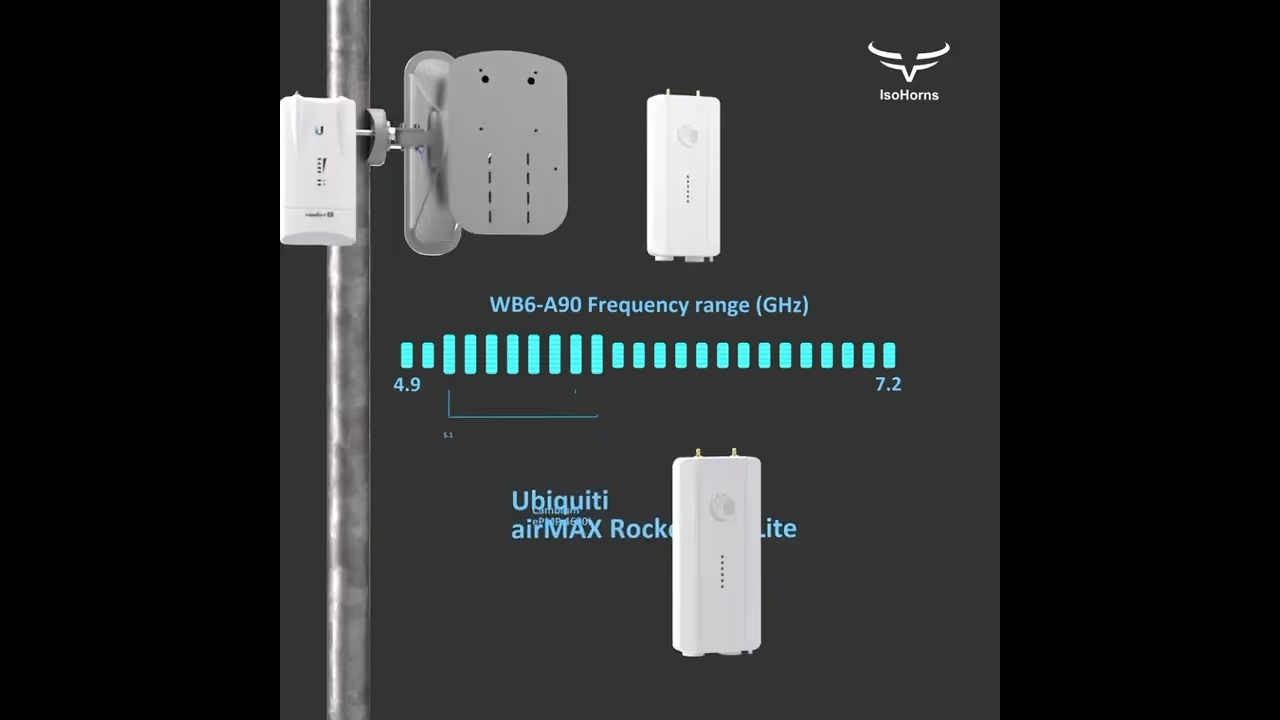
El WB6-A30 se suele combinar con radios de Ubiquiti, Cambium y Mimosa. Estas plataformas son populares en redes WISP porque admiten operación punto a multipunto (PtMP), protocolos de acceso basados en TDMA y, en los modelos con GPS, sincronización para agrupar varias antenas de bocina en la misma torre.
Entre las radios compatibles más comunes se incluyen:
• Cambium ePMP 3000L
• Cambium ePMP 4500L
• Cambium ePMP 4600L
• Ubiquiti Rocket Prism AC Gen2
• Ubiquiti Rocket AC Lite
• Ubiquiti Rocket LTU
• Mimosa A5x
Diseñado para resolver los desafíos comunes de los proveedores de servicios de internet inalámbrico (WISP). Interferencias en entornos de radiofrecuencia ruidosos El patrón de haz estrecho de 30° del WB6-A30 y su excelente rendimiento frontal-posterior ayudan a reducir las interferencias de los sectores vecinos y las señales no deseadas, mejorando la fiabilidad de la red y la calidad de la señal.
Capacidad limitada del sector Los sectores amplios pueden obligar a demasiados suscriptores a compartir el mismo tiempo de emisión. Al dividir la cobertura en varios sectores de 30°, los operadores pueden aumentar la capacidad y atender a más suscriptores de forma más eficiente.
Reutilización de baja frecuencia El patrón de cobertura controlado de 30° minimiza la superposición entre sectores, lo que facilita la reutilización de frecuencias en toda la ubicación de la torre y maximiza el espectro disponible.
Migración a redes de 6 GHz Con una cobertura de banda ancha de 4,9 a 7,2 GHz, el WB6-A30 admite radios de 5 GHz y 6 GHz, lo que permite a los operadores actualizarse a tecnologías más recientes sin necesidad de reemplazar las antenas.
Ampliar la capacidad sin nueva infraestructura de torres El WB6-A30 permite a los operadores añadir sectores adicionales y aumentar la capacidad de la red en las torres existentes, reduciendo la necesidad de nuevos emplazamientos e inversiones adicionales en infraestructuras.
Casos de uso típicos Emplazamientos de torres WISP de alta densidad Cuando muchos suscriptores se concentran en un área geográfica relativamente pequeña, un sector de 30° permite a los operadores dividir la cobertura en múltiples sectores estrechos en lugar de utilizar sectores amplios de 90° o 120°. Esto aumenta la capacidad y permite que más clientes compartan la torre de manera eficiente.
Corredores de cobertura largos y estrechos Un sector de 30° es ideal para áreas donde los suscriptores se concentran en una dirección específica, como autopistas, valles, zonas costeras, parques industriales o corredores de crecimiento suburbano. En lugar de irradiar energía a áreas no utilizadas, la antena concentra la cobertura donde se encuentran los clientes.
Ampliación de la capacidad de las torres existentes Los proveedores de servicios de internet inalámbrico (WISP) pueden aumentar la capacidad de la red reemplazando sectores amplios por múltiples sectores de 30°. Este enfoque reduce la cantidad de suscriptores que comparten cada punto de acceso y permite a los operadores ampliar la capacidad de la red sin necesidad de construir nuevas torres de telecomunicaciones.
Redes Wi-Fi 6E y Wi-Fi 7 de alto rendimiento Con una amplia cobertura de banda ancha de 4,9 a 7,2 GHz, el WB6-A30 es compatible con equipos inalámbricos fijos modernos que operan tanto en las bandas de 5 GHz como de 6 GHz, lo que lo hace adecuado para implementaciones de próxima generación de Wi-Fi 6E y Wi-Fi 7.
¿Para quién está diseñada la bocina WB6-A30? El WB6-A30 es ideal para:
• Proveedores de servicios de internet inalámbrico (WISP)
• Proveedores de banda ancha en zonas rurales
• Operadores de redes inalámbricas fijas
• Integradores de red que implementan infraestructura punto a multipunto (PtMP)
• Proveedores de servicios que actualizan o se expanden a redes de 6 GHz
¿Qué diferencia al WB6-A30 de productos similares en la industria? En comparación con otras antenas de bocina de 30° similares en la industria, la WB6-A30 combina una cobertura de banda ancha real de 4,9 a 7,2 GHz, un excelente aislamiento de RF y compatibilidad preparada para el futuro en una sola plataforma. Mientras que muchos productos de la competencia están diseñados principalmente para la banda de 5 GHz o requieren sistemas adaptadores propietarios, la WB6-A30 admite implementaciones tanto de 5 GHz como de 6 GHz, se integra fácilmente con radios modernas con conectores y está diseñada para ayudar a los proveedores de servicios de internet inalámbrico (WISP) a construir redes punto a multipunto más limpias y de mayor capacidad.
Operación de banda ancha real La mayoría de las antenas de bocina de 30° de la competencia se diseñaron originalmente para la banda de 5 GHz. La WB6-A30 cubre de 4,9 a 7,2 GHz, lo que permite a los operadores utilizar tanto equipos actuales de 5 GHz como radios más recientes de 6 GHz en la misma infraestructura de antena.
Preparado para radios modernas de 6 GHz La WB6-A30 está optimizada para las plataformas de banda ancha actuales, como Ubiquiti Wave MLO6 y Cambium ePMP 4600, lo que elimina la necesidad de reemplazar las antenas al migrar a redes de 6 GHz de mayor capacidad.
Mejor rechazo de interferencias Con una relación frontal-posterior de aproximadamente 40 dB y un aislamiento de puerto superior a 35 dB, el WB6-A30 está diseñado para minimizar la superposición de sectores y reducir la energía de radiofrecuencia no deseada, lo que ayuda a mantener velocidades de modulación más altas y un rendimiento más fiable para los abonados.
Instalación simplificada A diferencia de algunas antenas de bocina de la competencia que dependen de sistemas adaptadores propietarios, la WB6-A30 incluye conectores RP-SMA, lo que facilita su integración con una variedad de radios con conectores.
Diseñado para el crecimiento de la capacidad El haz estrecho de 30° permite a los proveedores de servicios de internet inalámbrico (WISP) dividir una torre en más sectores, lo que aumenta la eficiencia del tiempo de transmisión y permite dar servicio a más suscriptores sin ampliar la infraestructura de la torre.
Preguntas frecuentes ¿Para qué está diseñado el WB6-A30? La WB6-A30 es una antena de bocina asimétrica de 30° de alta ganancia diseñada para redes inalámbricas punto a multipunto (PtMP). Ayuda a los proveedores de servicios de internet inalámbrico (WISP) a mejorar la cobertura, aumentar la capacidad de la red, reducir las interferencias y ofrecer un servicio de internet más rápido y fiable.
¿Qué rango de frecuencias admite el WB6-A30? El WB6-A30 funciona en todo el rango de 4,9 a 7,2 GHz, cubriendo implementaciones de seguridad pública de 4,9 GHz, banda ancha inalámbrica de 5 GHz, Wi-Fi 6E de 6 GHz y futuras aplicaciones de Wi-Fi 7.
¿Qué radios son compatibles con el WB6-A30? El WB6-A30 es compatible con muchas radios con conector populares, entre ellas:
• Cambium ePMP 3000L
• Cambium ePMP 4500L
• Cambium ePMP 4600L
• Ubiquiti Rocket Prism AC Gen2
• Ubiquiti Rocket AC Lite
• Ubiquiti Rocket LTU
• Mimosa A5x
La antena incluye conectores macho RP-SMA para una fácil integración.
¿Por qué elegir una antena de bocina de 30°? Un haz de 30° proporciona una cobertura altamente focalizada, lo que la hace ideal para despliegues de alta densidad donde minimizar las interferencias y maximizar la reutilización de frecuencias es fundamental. Además, permite a los operadores dividir la cobertura en múltiples sectores estrechos, aumentando la capacidad de la red y dando soporte a más abonados por torre.
¿El WB6-A30 ayuda a reducir las interferencias? Sí. El patrón de haz estrecho del WB6-A30 y su excelente rendimiento de adelante hacia atrás ayudan a reducir la interferencia de sectores vecinos y señales no deseadas, mejorando la confiabilidad de la red y la calidad de la señal.
¿Es el WB6-A30 adecuado para emplazamientos con torres de alta densidad? Sí. El WB6-A30 es ideal para emplazamientos con torres de alta densidad, donde muchos abonados se concentran en un área geográfica relativamente pequeña. Su estrecho patrón de cobertura de 30° permite a los operadores desplegar sectores adicionales y aumentar la capacidad de la red.
¿Puedo usar el WB6-A30 con radios de 5 GHz y 6 GHz? Sí. El diseño de banda ancha de 4,9 a 7,2 GHz del WB6-A30 admite radios de 5 GHz y 6 GHz, lo que permite a los operadores migrar a tecnologías más recientes sin necesidad de reemplazar las antenas.
¿El WB6-A30 es compatible con Wi-Fi 6E y Wi-Fi 7? Sí. El rango de funcionamiento de la antena, de 4,9 a 7,2 GHz, es totalmente compatible con las implementaciones actuales de 6 GHz, incluidas las tecnologías Wi-Fi 6E y Wi-Fi 7 emergentes.
¿Cómo ayuda el WB6-A30 a mejorar la capacidad de la red? Al reducir las interferencias y mejorar la relación señal-ruido (SNR), el WB6-A30 ayuda a los puntos de acceso a mantener velocidades de modulación más altas y una utilización más eficiente del tiempo de transmisión. Esto permite atender a más suscriptores desde un único punto de acceso.
¿Es el WB6-A30 adecuado para su uso en exteriores? Sí. La antena cuenta con una clasificación de resistencia a la intemperie IP67 y está diseñada para funcionar a largo plazo en exteriores, incluso en condiciones ambientales adversas.
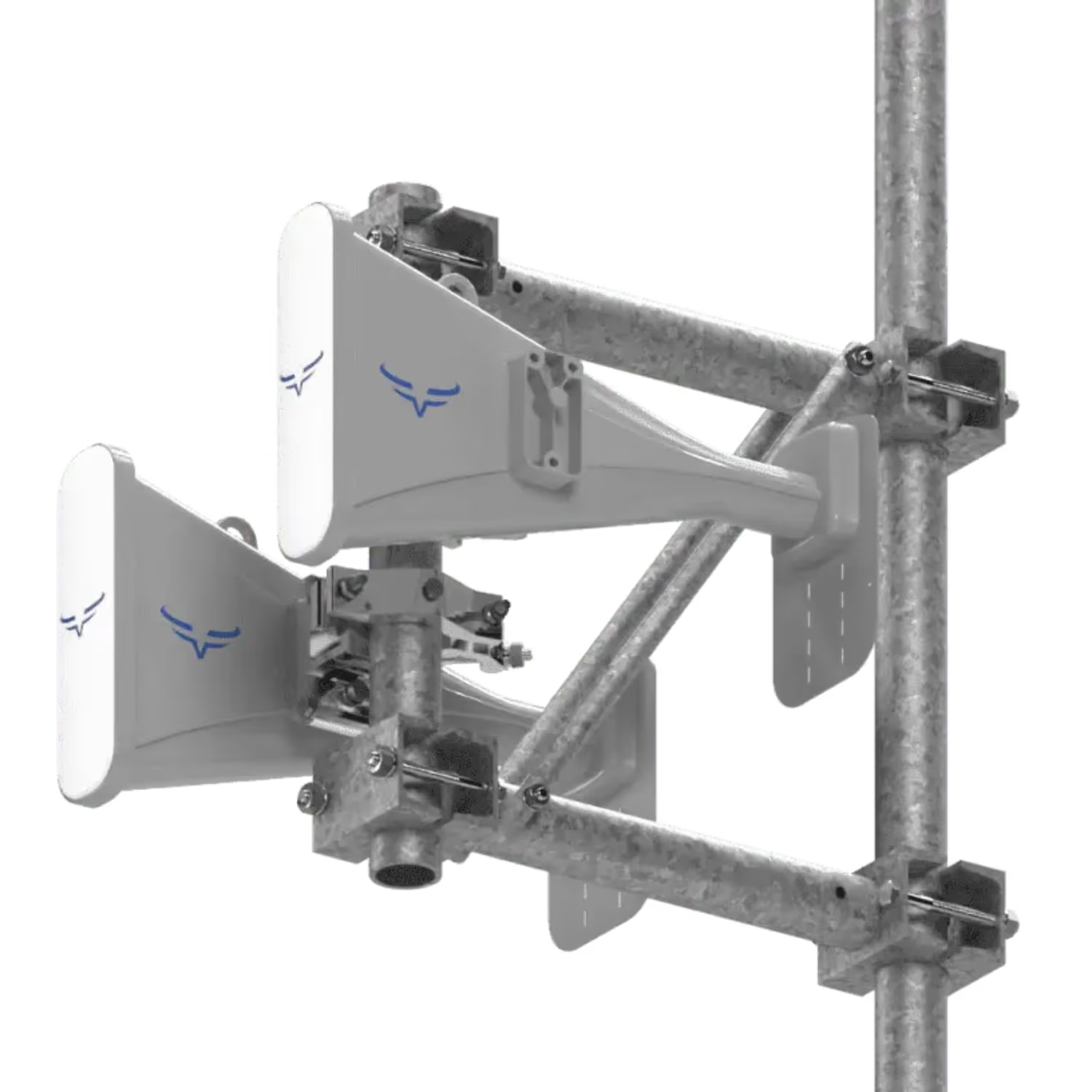
¿Se pueden instalar varias antenas WB6-A30 en la misma torre? Sí. El haz enfocado de 30° permite desplegar múltiples sectores en la misma torre, lo que mejora la reutilización de frecuencias y reduce la superposición entre sectores.
Productos relacionados
No se encontraron productos relacionados.
Related Products (Category & Subcategory)

Reseñas
Loading…
Wideband 6 GHz Asymmetrical 30° Horn Antenna
Número de modelo: WB6-A30
La antena sectorial de bocina de 30° de alta ganancia admite puntos de acceso punto a multipunto (PtMP) WISP de 5 GHz y 6 GHz de Ubiquiti, Cambium y Mimosa.
Características
- Ancho del haz azimutal: 30°
- Rango de frecuencia: 4,9-7,2 GHz
- Ganancia: 18,5-21 dBi
- Aislamiento de puertos: >35 dB
- VSWR: <1,6
- Relación frontal-posterior: 40 dB
- Polarización: Doble lineal (H/V) 2x2 MIMO
- Conectores: Latiguillos macho RP-SMA (incluidos)
- Clasificación de resistencia a la intemperie: IP67
- Compatibilidad con Ubiquiti: Wave-MLO5, Wave-MLO6, RP-5AC-Gen2, LTU-Rocket
- Compatibilidad con Cambium: ePMP 3000L, ePMP 4500L, ePMP 4600L
Especificaciones de envío
- •Dimensiones (L×A×A): 590×400×220
- •Peso: 6.92kg
Warehouse availability
Los Angeles
In stock
35 available