Overview
Details
1. More clean spectrum
Wi-Fi 6E extends Wi-Fi 6 into the 6 GHz band, giving WISPs additional unlicensed spectrum beyond crowded 2.4 GHz and 5 GHz bands. In the U.S., Wi-Fi 6E can use up to 1,200 MHz from 5.925–7.125 GHz. In many international markets, available 6 GHz spectrum varies by country, commonly including the lower 6 GHz band around 5.925–6.425 GHz, with some countries also opening more of the band. This gives WISPs more room for clean channel planning and helps reduce co-channel interference between towers, sectors, neighboring WISPs, and customer Wi-Fi equipment.
2. Better capacity in dense areas
The 6 GHz band creates many more non-overlapping channel options. In markets where the full 1,200 MHz is available, Wi-Fi 6E can support up to 59 non-overlapping 20 MHz channels, 29 40 MHz channels, 14 80 MHz channels, or 7 160 MHz channels. In countries with less 6 GHz spectrum available, the number of channels is smaller, but still adds important capacity compared with relying only on 2.4 GHz and 5 GHz. This gives WISPs more channel-reuse options in dense neighborhoods, multi-tower deployments, apartment complexes, business parks, and areas where 5 GHz is already saturated.
3. Higher throughput for fixed wireless
Wi-Fi 6E combines cleaner 6 GHz spectrum with 80 MHz and 160 MHz channels, 1024-QAM modulation, OFDMA, and MU-MIMO. This allows higher peak speeds and better real-world throughput on short-to-medium fixed wireless links with strong signal quality and clear line of sight. Compared with 256-QAM, 1024-QAM can provide roughly 25% higher data rates when RF conditions are strong enough.
4. Lower latency and better airtime efficiency
OFDMA lets a Wi-Fi 6E AP divide a channel into smaller resource units and serve multiple CPEs more efficiently, instead of forcing every subscriber to wait for full-channel access. MU-MIMO also allows the AP to communicate with multiple clients more effectively, which helps reduce airtime contention, improve latency, and increase usable sector capacity.
5. Better outdoor possibilities with AFC or local coordination rules
For U.S. outdoor and standard-power 6 GHz operation, Wi-Fi 6E uses AFC, or Automated Frequency Coordination, to determine which frequencies and power levels are allowed at a specific location so unlicensed WISP equipment can coexist with licensed 6 GHz incumbents. International rules vary by country. Some markets allow only low-power indoor 6 GHz operation, while others are developing or adopting standard-power outdoor frameworks similar to AFC. For WISPs, the biggest opportunity comes when local regulations allow outdoor or higher-power 6 GHz use.
6. Cleaner customer LANs
Even when 6E is not used for tower-to-customer access, a WISP-provided Wi-Fi 6E router can move compatible phones, laptops, tablets, and streaming devices onto the 6 GHz band, keeping them off congested 2.4 GHz and 5 GHz channels. That reduces in-home Wi-Fi congestion and support calls that are caused by the customer LAN rather than the WISP’s access network.
7. Better service tiers
With access to additional 6 GHz spectrum, wider 80 MHz and 160 MHz channels, and 1024-QAM modulation under good RF conditions, WISPs can deliver higher-speed plans, improve business-class service options, and add capacity in markets where 5 GHz no longer has enough clean spectrum for reliable growth.
Produits associés
Filtrer par tags
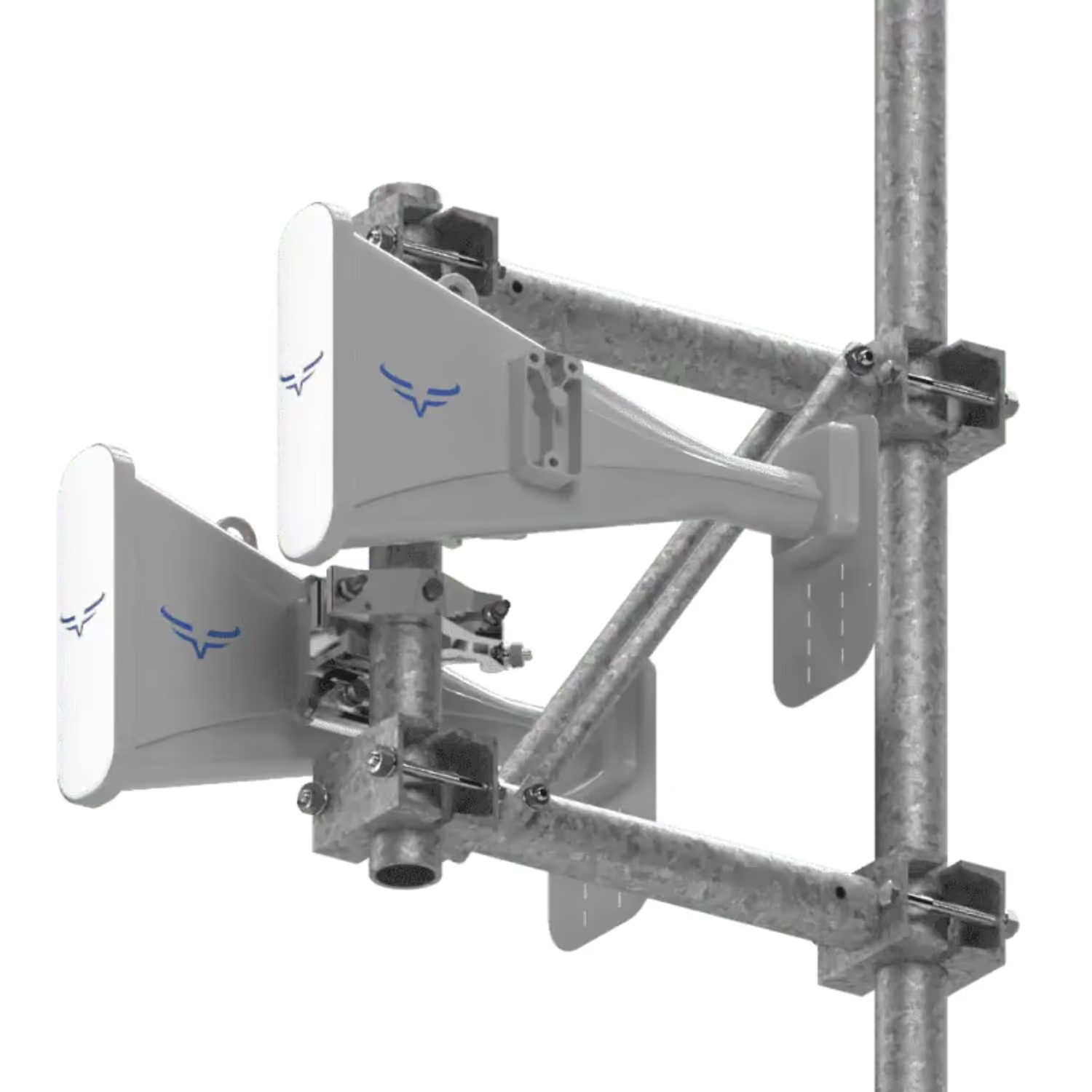
4x4 Double Horn Antenna
Deux antennes cornet asymétriques à large bande de 90° et un support déporté.
$799.00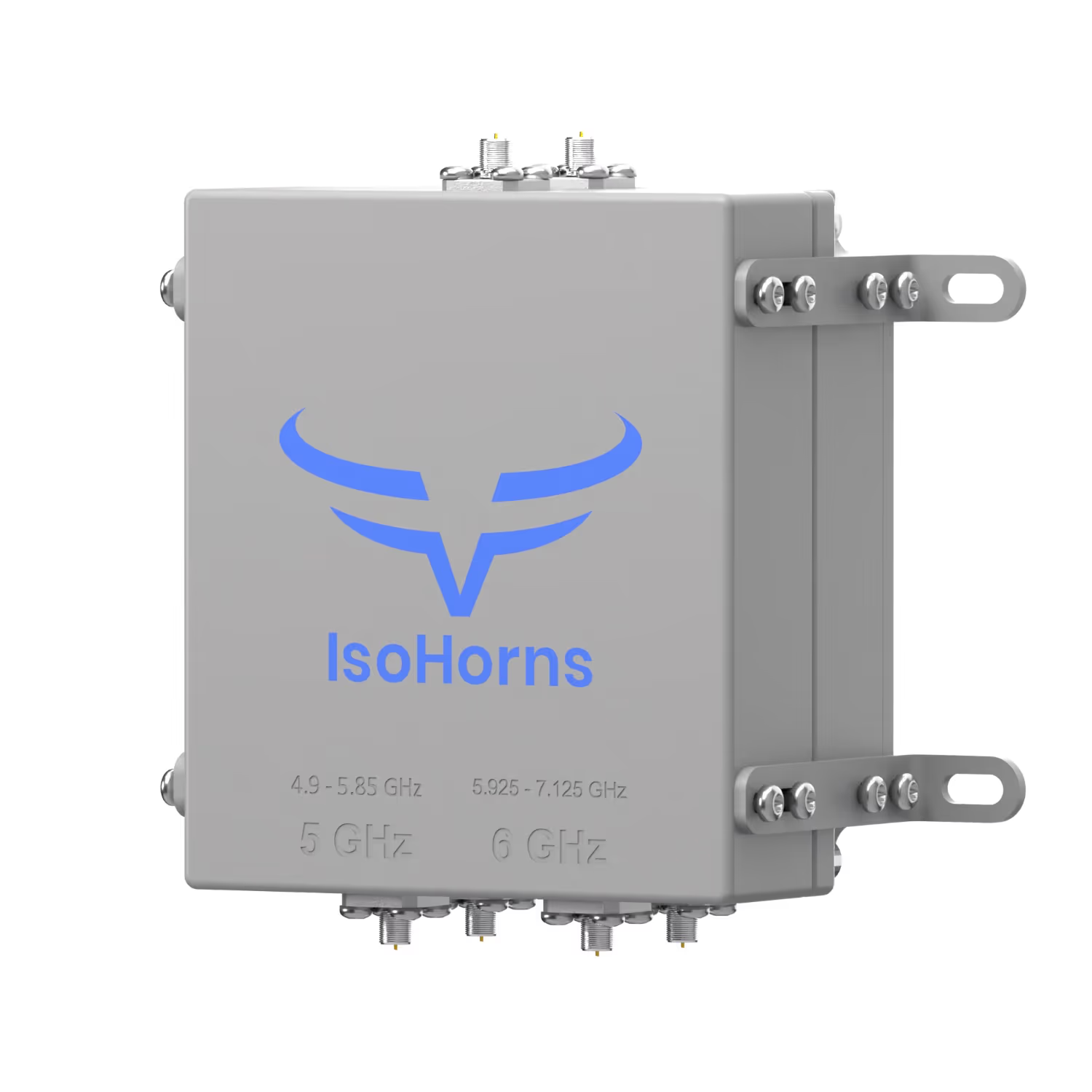
5 and 6 GHz Wi-Fi Diplexer 4x4
Utilisez des radios 5 et 6 GHz sur la même antenne à large bande.
$299.00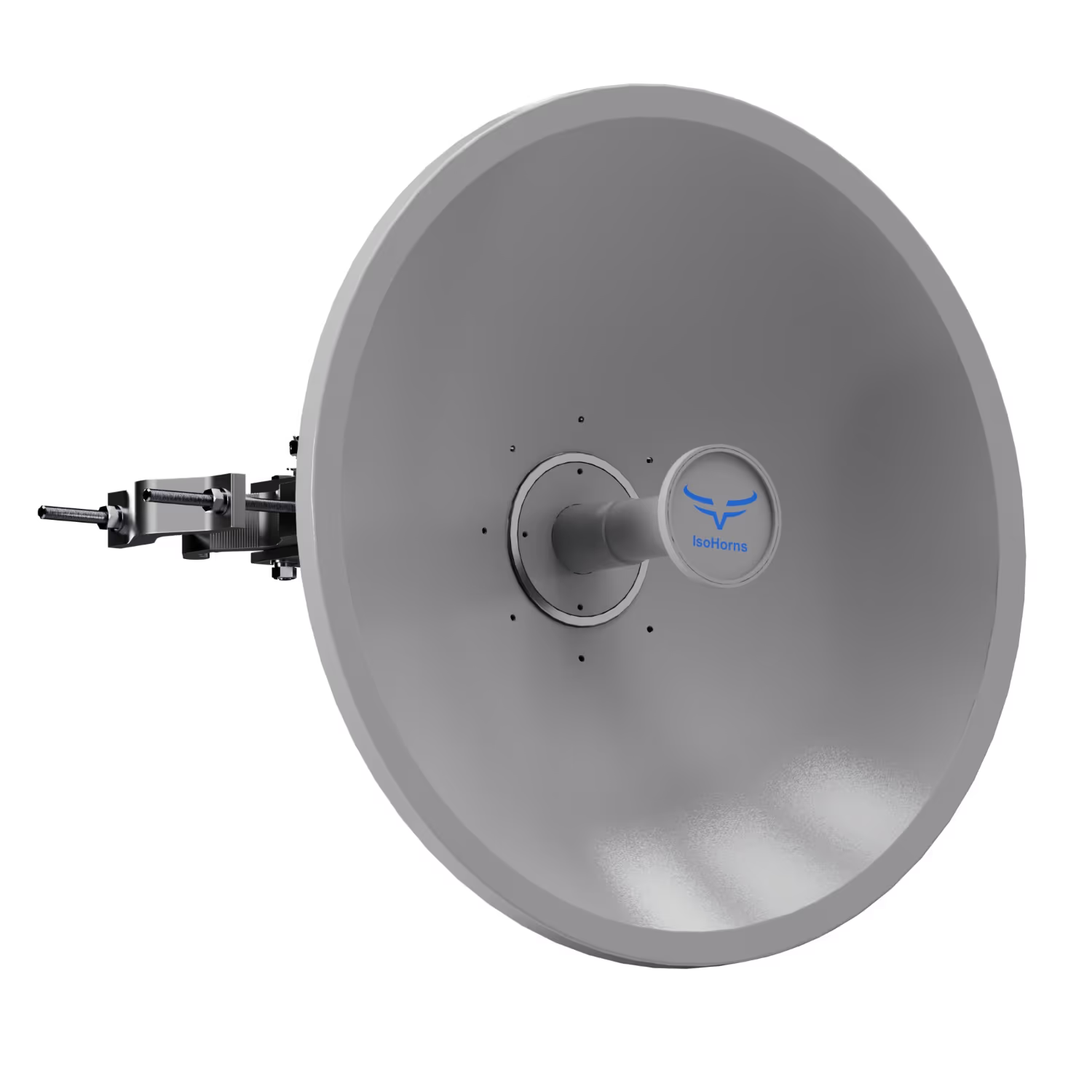
IsoDish 2-Pack
Antenne parabolique CPE large bande 6 GHz haute performance 600 mm (2 pi) paquet de 2 pour relais de pont sans fil Ubiquiti Wave MLO6 PtP, clients PtMP longue distance ePMP Force 4600c, installations d'abonnés WISP et déploiements CPE 5 GHz et 6 GHz économiques.
$399.00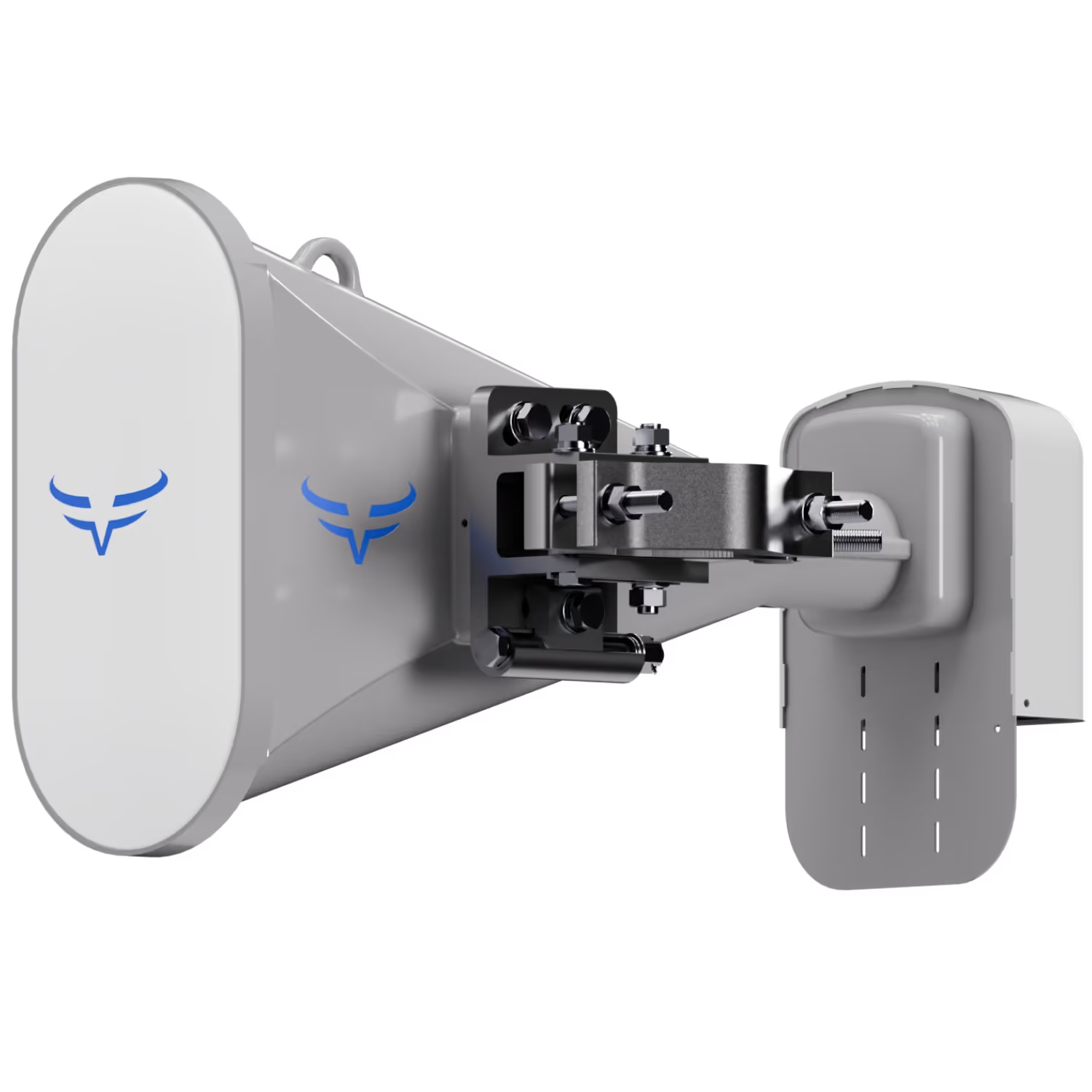
Wideband 6 GHz Asymmetrical 30° Horn Antenna
L'antenne sectorielle à cornet à gain élevé de 30° prend en charge les points d'accès point à multipoint (PtMP) WISP 5 GHz et 6 GHz d'Ubiquiti, Cambium et Mimosa.
$399.00
Wideband 6 GHz Backhaul 900 mm (3 ft) Deep Dish Antenna
Antenne de liaison sans fil à parabole profonde de 900 mm à gain élevé de 4,9 à 7,2 GHz pour les ponts sans fil PTP longue portée de 10 à 20 km, Wi-Fi 6E, Wi-Fi 7 MLO, Ubiquiti Wave MLO5/6, Cambium ePMP Force 4600c et déploiements de liaison sans fil WISP.
$799.00