Descripción general
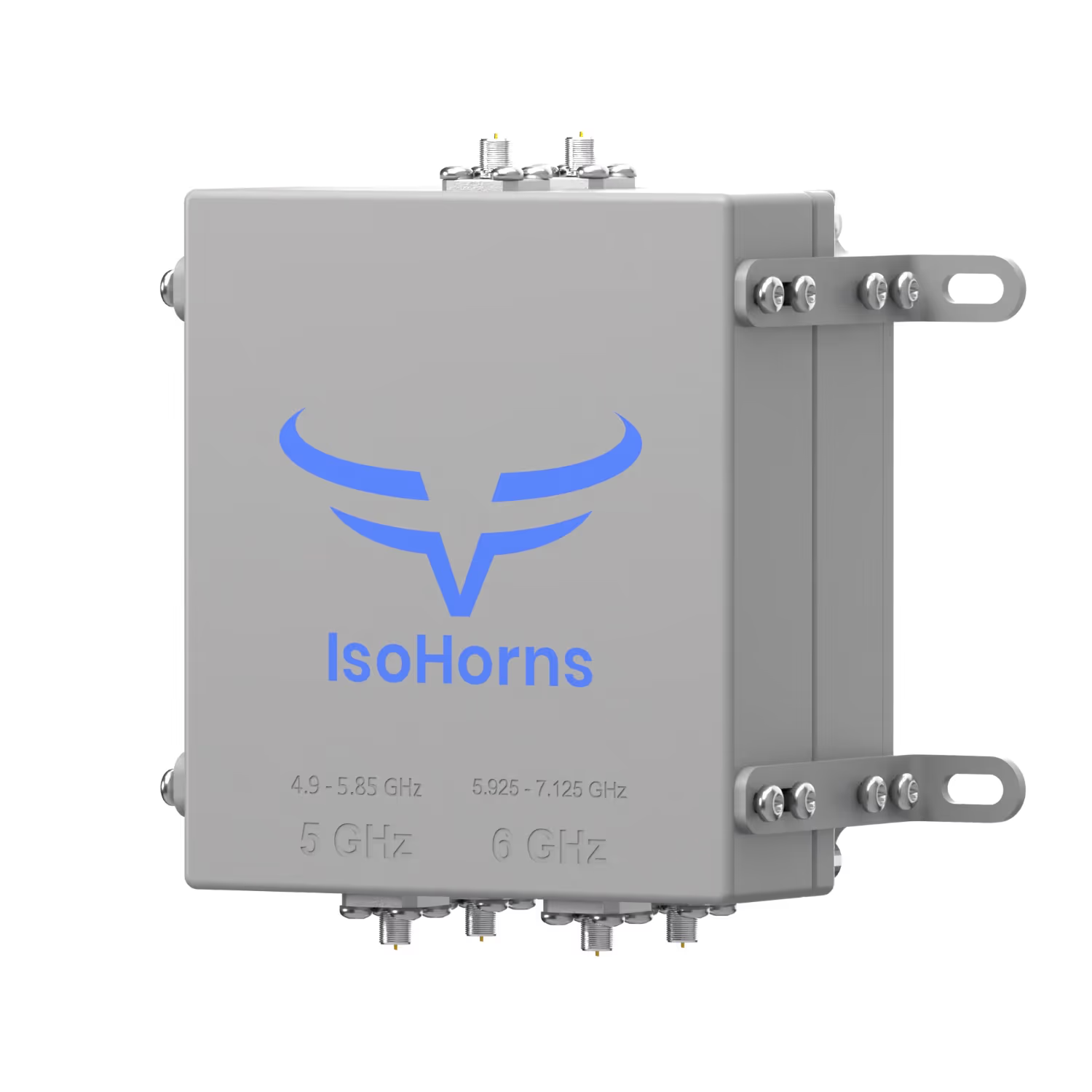
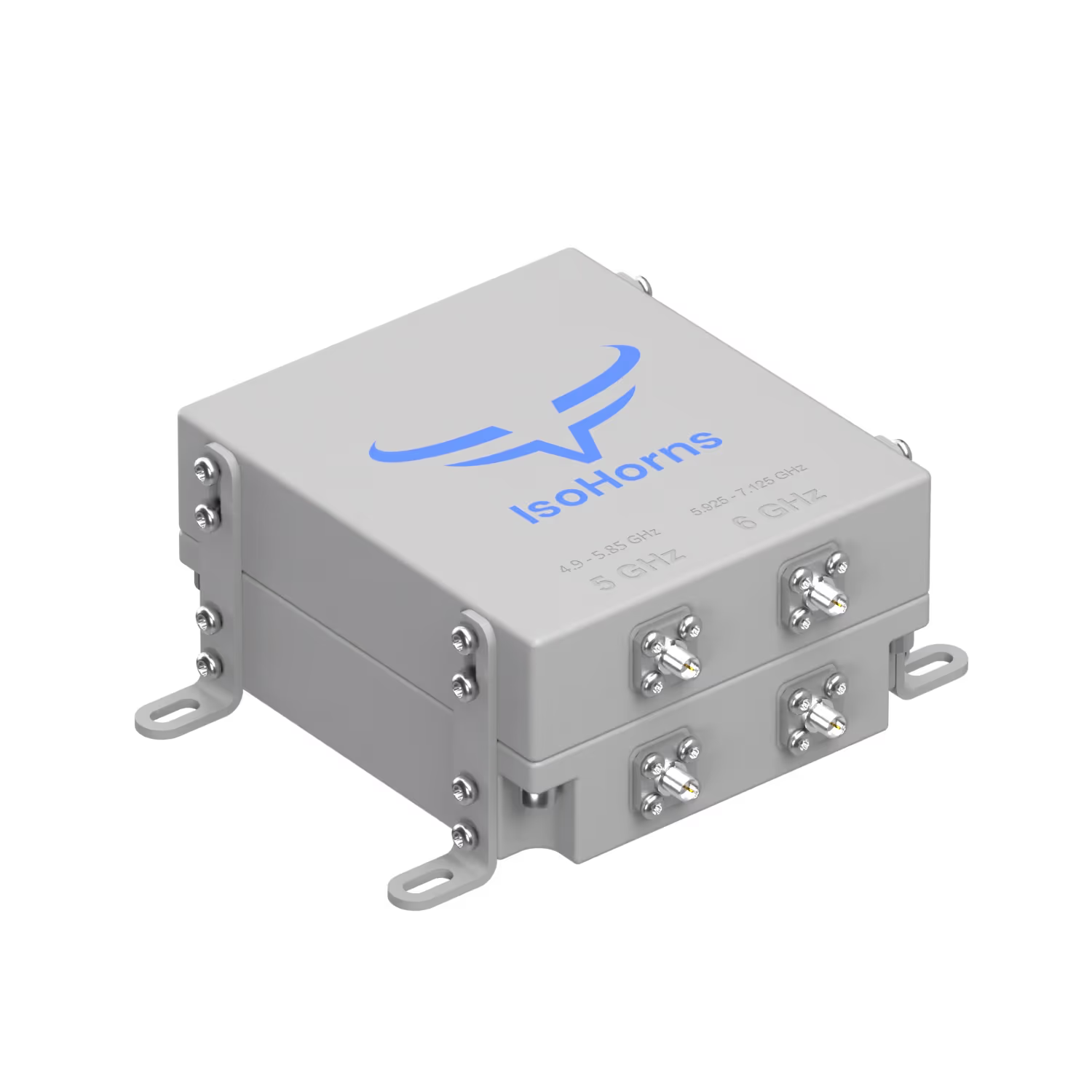
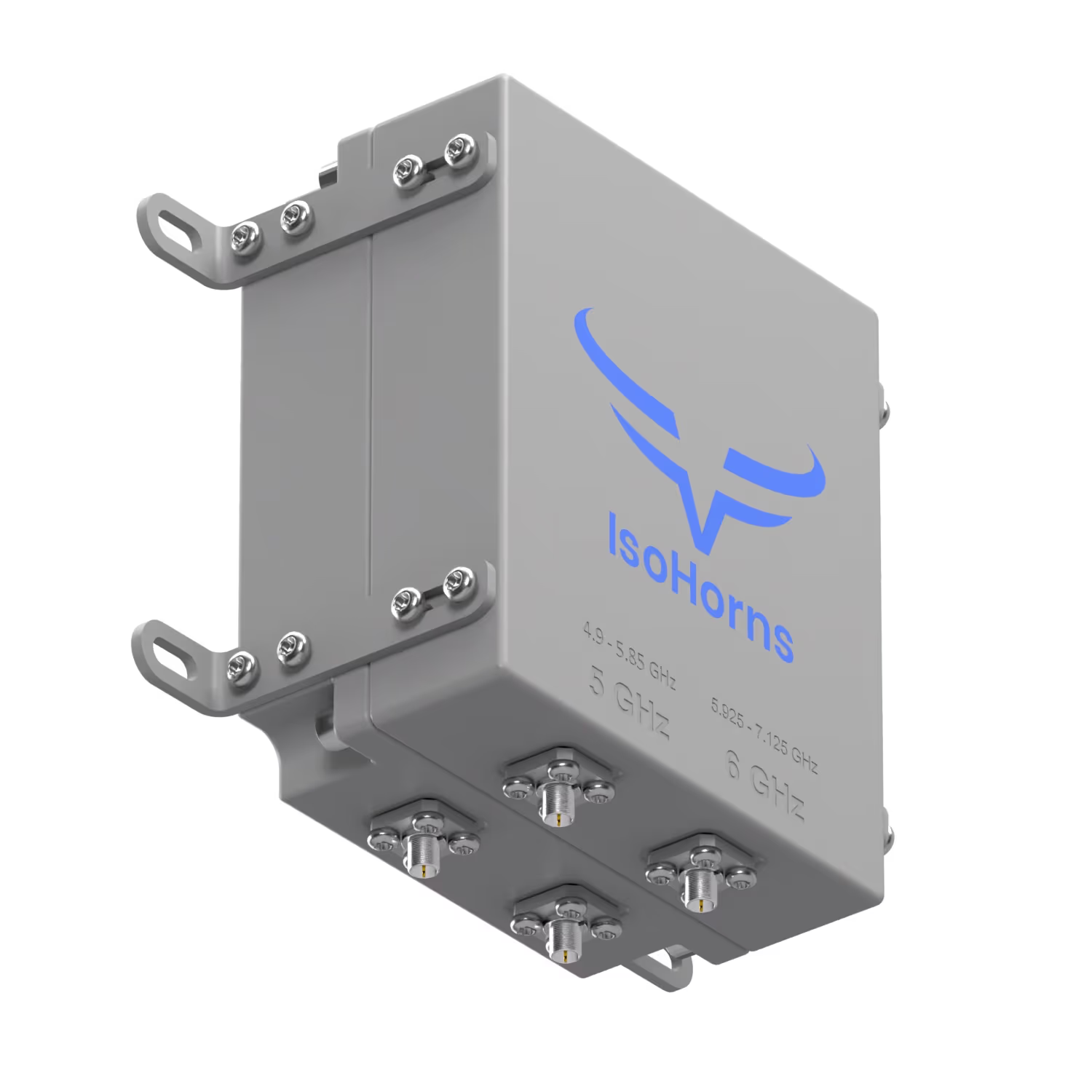
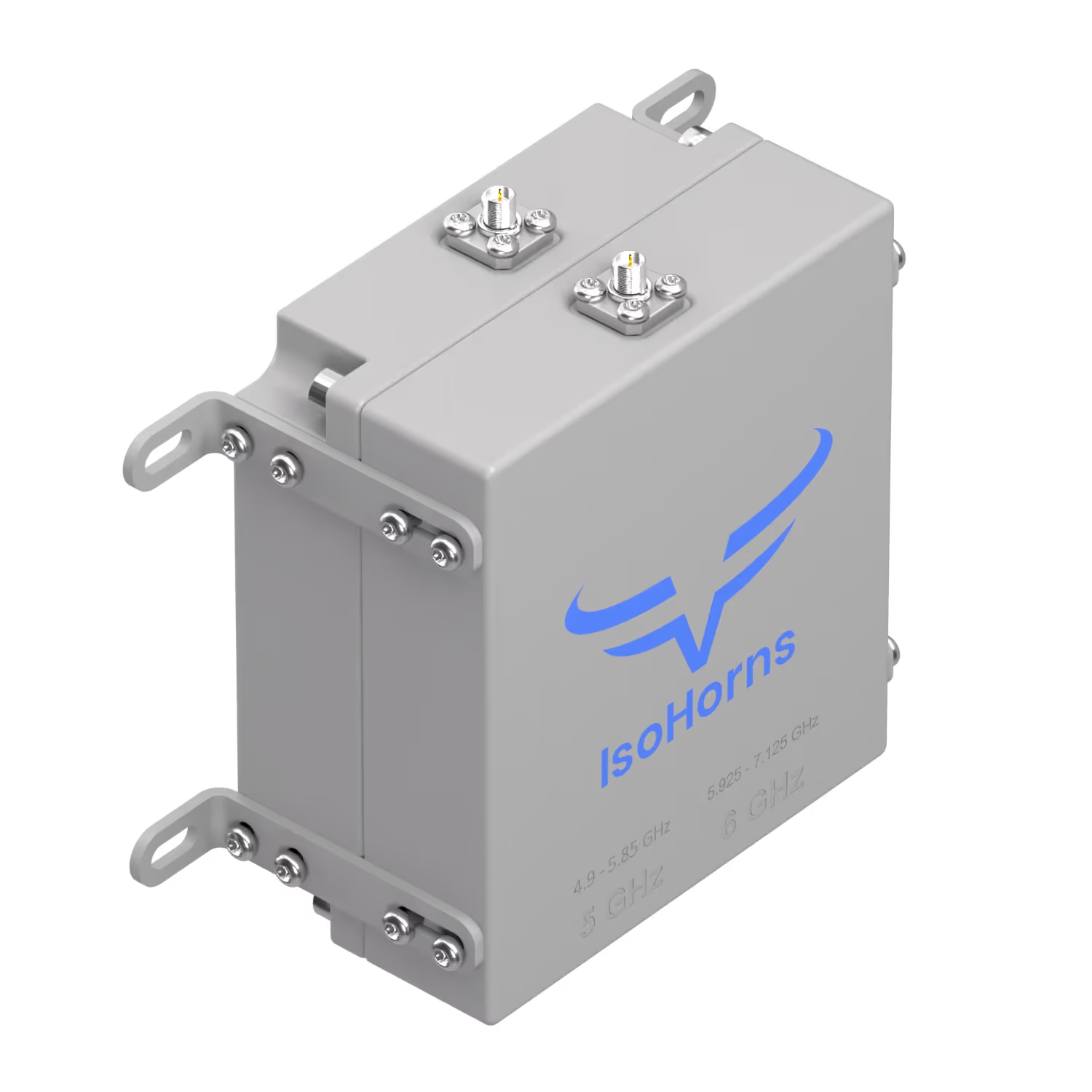
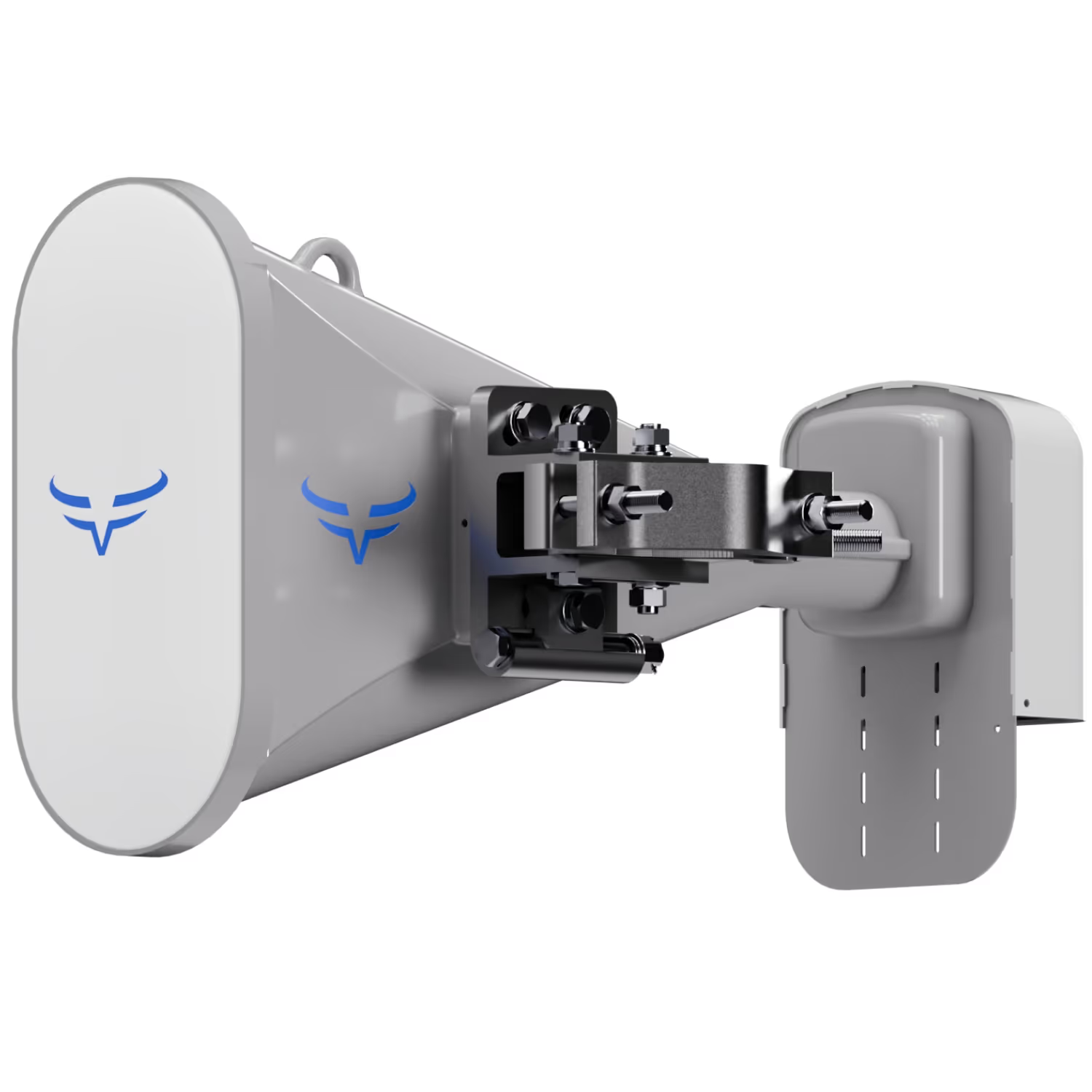
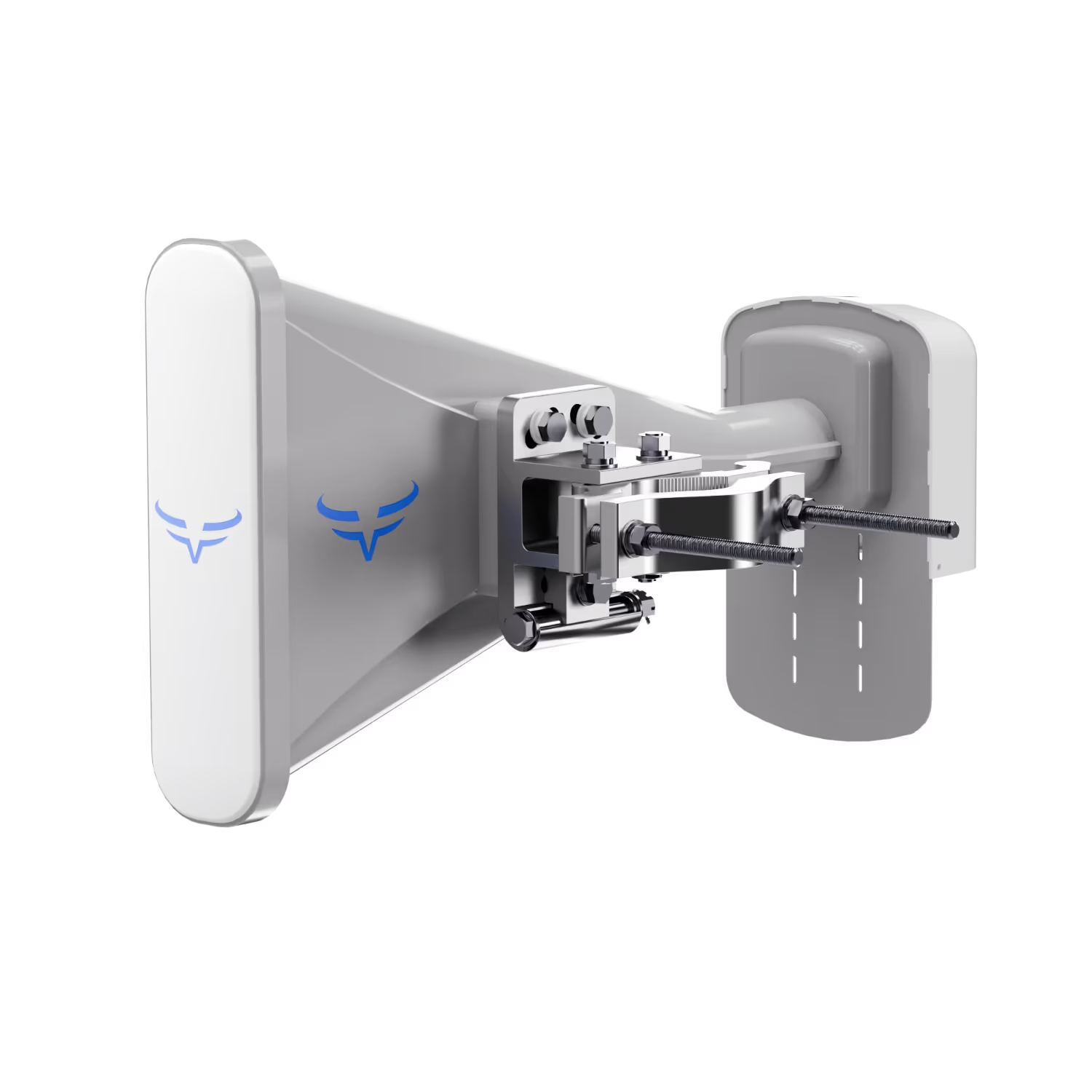
El Diplexor 4x4 de 5-6 GHz permite a los operadores operar radios de 5 y 6 GHz con una sola antena de banda ancha, eliminando la necesidad de múltiples antenas y reduciendo el espacio en la torre, la carga de viento y los costos de mantenimiento. Con una pérdida de inserción inferior a 0,6 dB y un aislamiento superior a 30 dB, mantiene un excelente rendimiento de RF.
Aumentar la capacidad Los diplexores aumentan la capacidad de las antenas al permitir enlaces de 5 GHz y 6 GHz en las mismas antenas grandes de alta ganancia, lo que significa conexiones más rápidas sin necesidad de antenas adicionales.
enlace troncal PTP
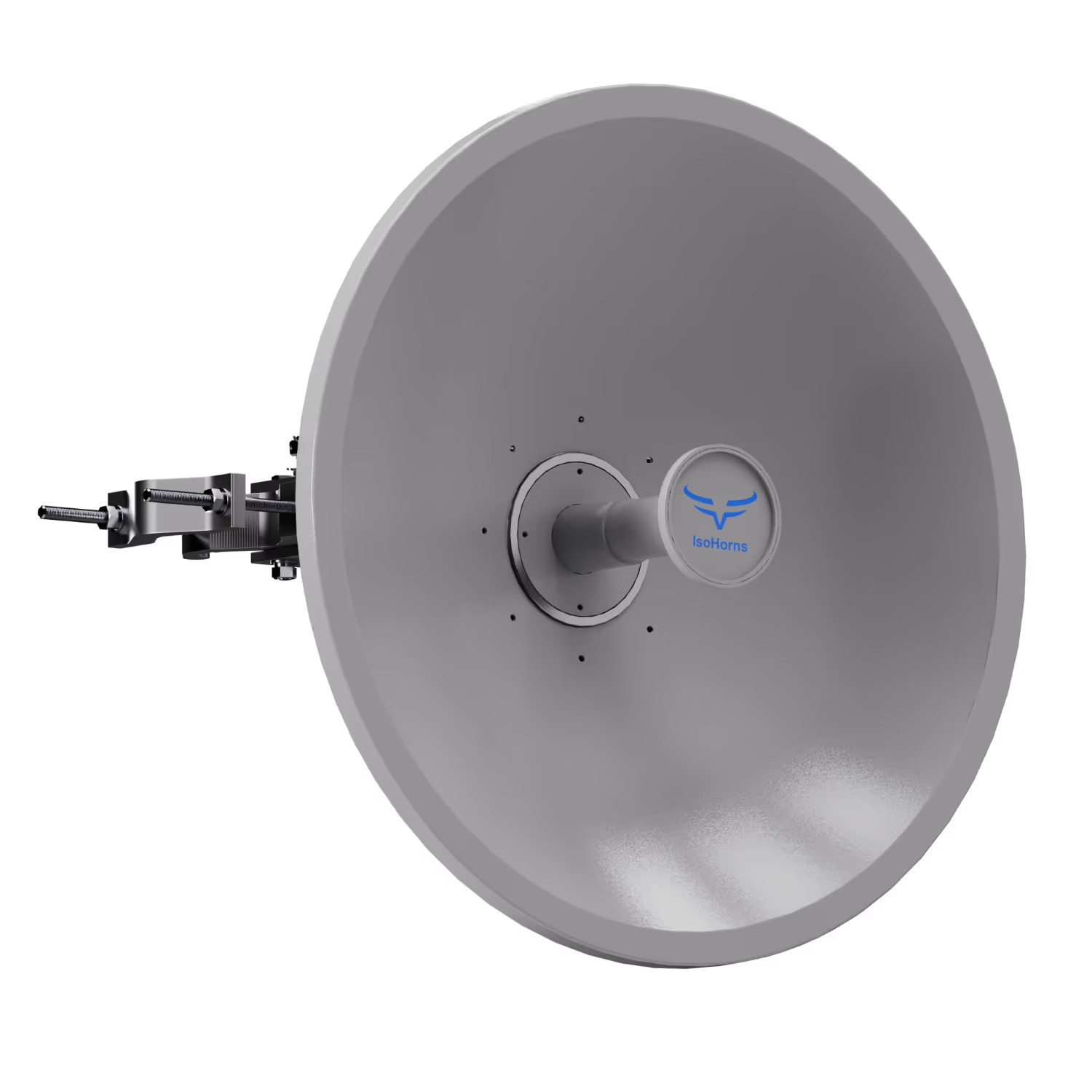
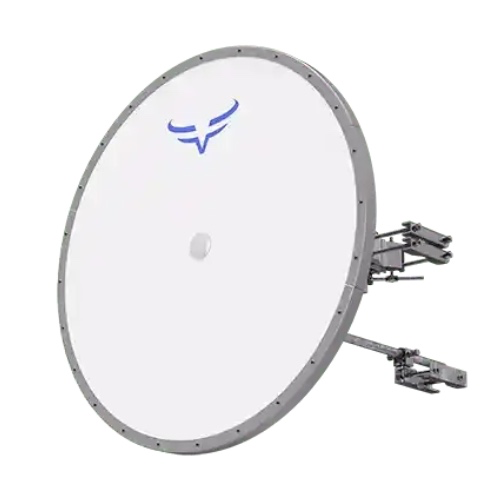
Los diplexores aumentan la capacidad de las antenas de enlace troncal al permitir enlaces punto a punto de 5 GHz y 6 GHz en las mismas antenas grandes de alta ganancia, lo que significa conexiones de enlace troncal más rápidas sin necesidad de antenas de enlace troncal adicionales.
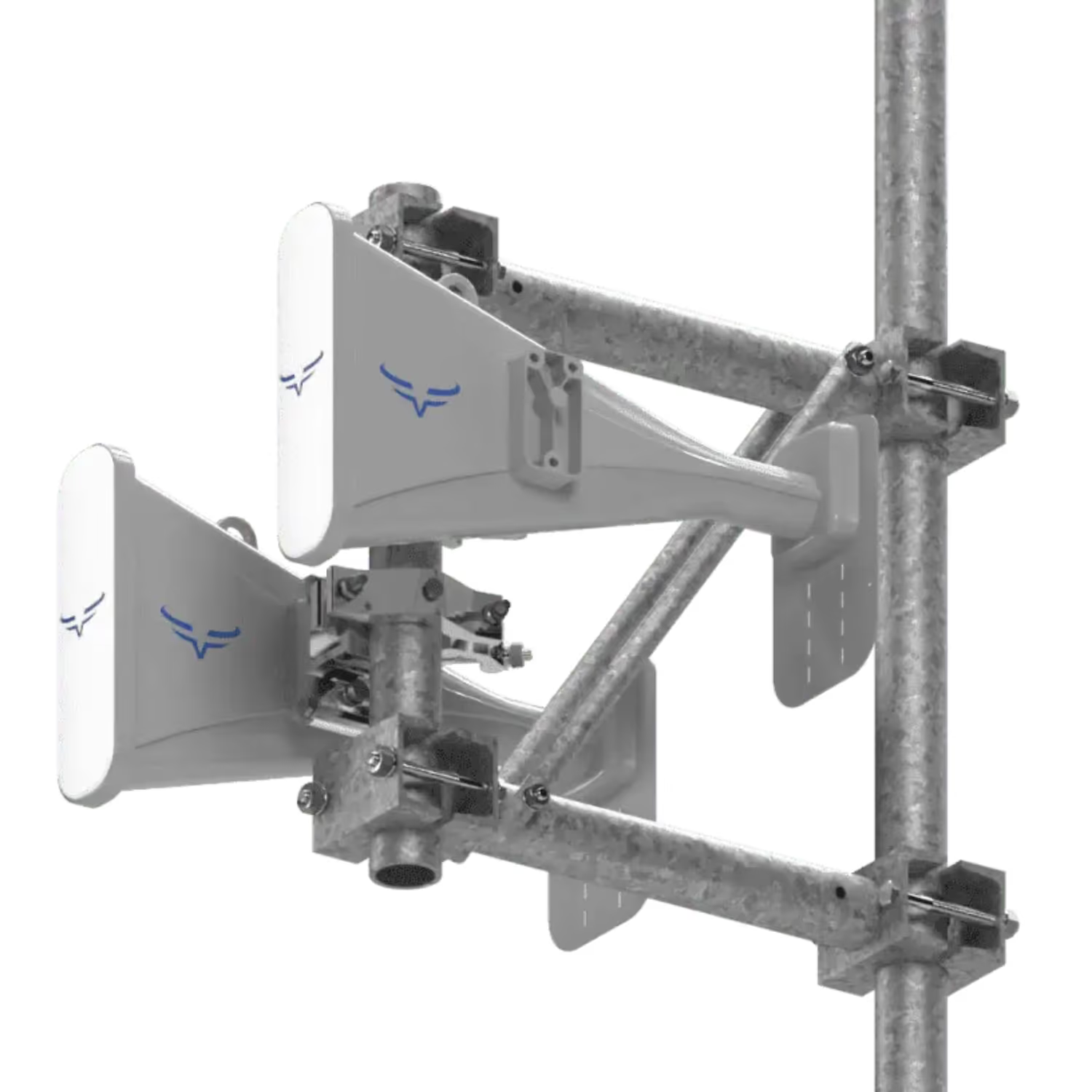
Sectores y bocinas PtMP
El proceso de actualización también es más flexible para los instaladores, quienes pueden programar visitas para reemplazar gradualmente los equipos de cliente (CPE). Además, los proveedores de servicios de internet inalámbrico (WISP) tienen la opción de actualizar a los clientes a medida que estos aceptan pagar por dichas mejoras, lo que permite una ruta de actualización rentable y centrada en el cliente.
Reducción del espacio en la torre, la carga de viento y el alquiler. La configuración compacta que ofrecen los diplexores reduce el espacio físico necesario en las torres. Esto resulta especialmente beneficioso, ya que el espacio en las torres suele ser limitado y costoso. Al ocupar menos espacio, los proveedores de servicios de internet inalámbrico (WISP) pueden reducir su alquiler o disponer de espacio para equipos adicionales, si fuera necesario.
enlace troncal PTP Los diplexores aumentan la capacidad de las antenas de enlace troncal al admitir enlaces PTP de 5 GHz y 6 GHz en las mismas antenas grandes de alta ganancia, lo que proporciona conexiones de enlace troncal más rápidas sin necesidad de antenas adicionales.
Mayor capacidad de transporte de retorno
El uso de diplexores aumenta la capacidad de las conexiones de retorno. Esta mejora es crucial para la infraestructura principal de cualquier red inalámbrica, ya que influye directamente en la calidad y velocidad del servicio de internet. Una conexión de retorno más robusta se traduce en un mejor servicio para los usuarios finales sin necesidad de costosas mejoras adicionales en la infraestructura.
Una antena robusta, múltiples enlaces.
Al consolidar múltiples enlaces punto a punto en una sola antena de alta ganancia, los operadores maximizan su inversión en infraestructura. Menos antenas significan menos compras de hardware, menos alquiler de espacio en torres y menores costos de capital iniciales. Con el tiempo, los gastos de mantenimiento también se minimizan: hay menos componentes que mantener, menos problemas de alineación y menor riesgo de inactividad. Esta configuración optimizada no solo genera ahorros a largo plazo, sino que también garantiza una estrategia de expansión de red más rentable y sostenible.
Diseñado para resolver los desafíos comunes de los proveedores de servicios de internet inalámbrico (WISP). Espacio limitado en la torre
Instalar antenas separadas para las radios de 5 GHz y 6 GHz consume un valioso espacio en la torre. El diplexor 4x4 de 5-6 GHz permite que ambas radios compartan una única antena de banda ancha, lo que reduce el espacio ocupado por los equipos y libera espacio para futuras ampliaciones.
Carga de viento en torres altas
El uso de múltiples antenas aumenta la carga de viento, lo que ejerce una presión adicional sobre las torres, los soportes y las estructuras de apoyo. Al integrar dos radios en una sola antena, el diplexor reduce la carga de viento y simplifica la instalación en las torres.
Capacidad insuficiente de transporte de retorno y del sector.
A medida que aumenta la demanda de suscriptores, los operadores suelen necesitar capacidad adicional sin tener que reconstruir la infraestructura existente. El diplexor permite enlaces simultáneos de 5 GHz y 6 GHz en la misma antena de alta ganancia, lo que incrementa la capacidad de la red y admite conexiones más rápidas sin necesidad de instalar antenas adicionales.
Altos costos de infraestructura
Agregar más antenas incrementa los gastos de hardware, el tiempo de instalación, los costos de alquiler de torres y los requisitos de mantenimiento continuo. Utilizar una antena compartida para ambas bandas de frecuencia reduce los gastos de capital y los costos operativos a largo plazo.
Migraciones complejas de 5 GHz a 6 GHz
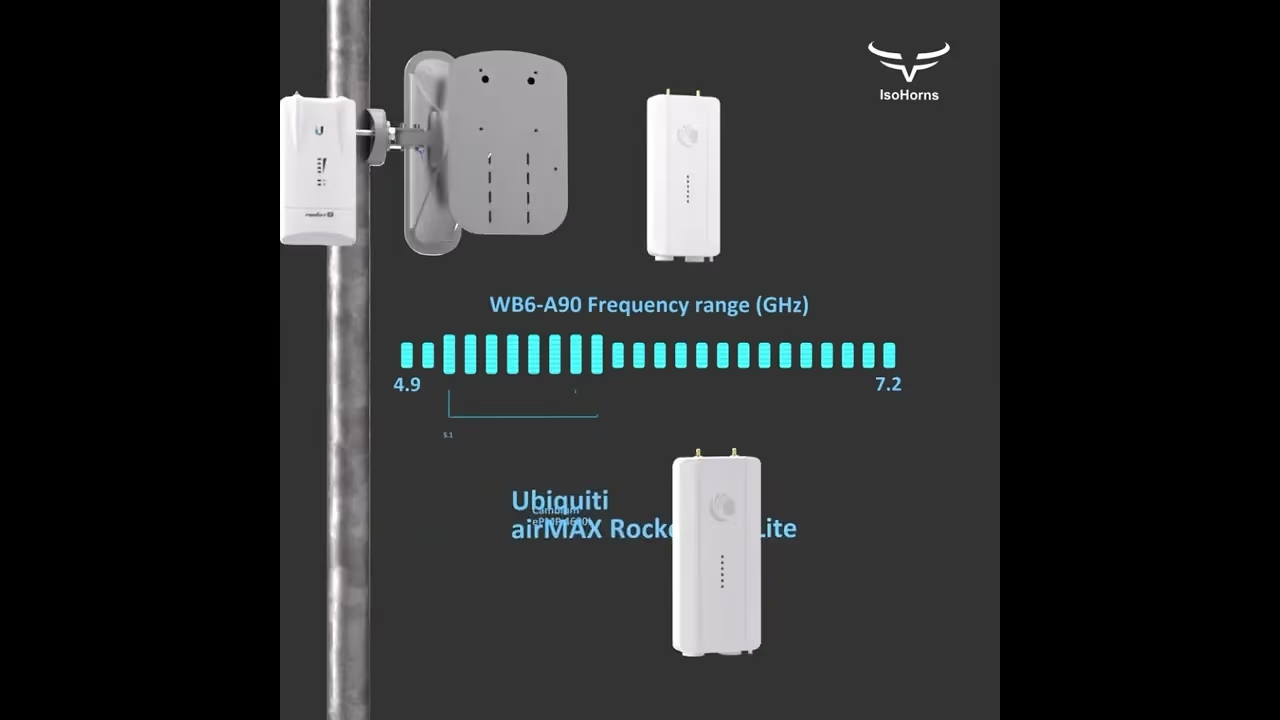
Muchos proveedores de servicios de internet inalámbrico (WISP) desean introducir servicios de 6 GHz sin dejar de operar sus redes de 5 GHz existentes. El diplexor 4x4 de 5 a 6 GHz permite que ambas bandas coexistan en la misma antena, facilitando actualizaciones graduales a petición del cliente sin necesidad de reemplazar antenas de inmediato ni realizar modificaciones importantes en las torres.
Mantener el rendimiento al combinar varias radios
La combinación de varias radios puede provocar pérdida de señal e interacciones no deseadas entre bandas de frecuencia. Con una pérdida de inserción inferior a 0,6 dB y un rechazo fuera de banda superior a 30 dB, el diplexor mantiene un rendimiento de RF óptimo, permitiendo que ambas radios operen de manera eficiente en un sistema de antena compartida.
Casos de uso típicos Implementaciones de doble banda de 5 GHz y 6 GHz
Utilice el diplexor para conectar radios independientes de 5 GHz y 6 GHz a una única antena de banda ancha, lo que permite diseños de red de doble banda que mejoran la utilización del espectro y aumentan la capacidad de la red.
Actualizaciones de red y migración a 6 GHz
Los proveedores de servicios de internet inalámbrico (WISP) pueden añadir equipos de 6 GHz a las redes de 5 GHz existentes sin necesidad de instalar antenas adicionales, lo que facilita la ampliación de la capacidad y minimiza las modificaciones en las torres.
Puntos de acceso punto a multipunto (PtMP)
Implemente radios de punto de acceso de 5 GHz y 6 GHz en el mismo sector de la torre utilizando una única antena compatible, lo que reduce la superficie ocupada por los equipos y simplifica las instalaciones.
Enlaces de retorno punto a punto (PtP)
Combine radios de enlace troncal de 5 GHz y 6 GHz en un sistema de antena compartida para admitir enlaces de alta capacidad, minimizando al mismo tiempo la carga de viento y los requisitos de espacio en la torre.
Optimización del espacio de la torre
Ideal para emplazamientos donde el espacio en la torre es limitado o costoso. El diplexor permite que varias radios compartan la misma antena, reduciendo así el número de antenas necesarias en la torre.
Proyectos de reducción de la carga de viento
Al eliminar la necesidad de antenas adicionales, el diplexor ayuda a reducir la carga de viento sobre las torres y los postes, lo que puede simplificar los requisitos estructurales y reducir los costos de instalación.
Redes inalámbricas de alta densidad
En entornos de radiofrecuencia saturados, los operadores pueden aprovechar las bandas de espectro de 5 GHz y 6 GHz mediante un sistema de antenas compartidas para aumentar la capacidad de la red y mejorar la flexibilidad en la planificación de frecuencias.
¿Para quién está diseñado el diplexor 4x4 de 5-6 GHz ? El diplexor 4x4 de 5–6 GHz es ideal para:
• Proveedores de servicios de internet inalámbrico (WISP)
• Operadores de transporte de retorno punto a punto (PtP)
• Operadores de redes PtMP de alta densidad
• Transición de los proveedores de servicios de internet inalámbrico (WISP) a 6 GHz
• Empresas de torres
• Integradores de sistemas inalámbricos
• Proveedores de infraestructura de red
• Proveedores de banda ancha en zonas rurales
• Operadores de redes inalámbricas empresariales
• Proveedores de servicios de red gestionados
¿Qué diferencia al diplexor 4x4 de 5-6 GHz de otros productos similares en la industria? En comparación con los combinadores de RF convencionales y los diplexores de uso general, el Diplexor 4x4 de 5 a 6 GHz está diseñado específicamente para implementaciones de WISP que requieren operar radios de 5 GHz y 6 GHz en una sola antena de banda ancha. Si bien muchos diplexores de RF en el mercado están diseñados para aplicaciones de laboratorio, celulares o con pocos canales, el Diplexor 4x4 de 5 a 6 GHz combina baja pérdida de inserción, alto aislamiento y soporte completo para MIMO 4x4 en una solución optimizada específicamente para las redes de banda ancha inalámbricas modernas.
Diseñado específicamente para redes WISP.
Si bien muchos diplexores están diseñados para aplicaciones generales de radiofrecuencia, telefonía celular o laboratorio, el diplexor 4x4 de 5 a 6 GHz está diseñado específicamente para implementaciones de WISP que utilizan radios de 5 GHz y 6 GHz independientes con una única antena de banda ancha. Su arquitectura 4x4 simplifica las instalaciones y optimiza el uso de la infraestructura de antenas y torres.
Capacidad MIMO 4x4 completa
Muchas soluciones de compartición de antenas se limitan a configuraciones de un solo canal o 2x2. El diplexor 4x4 de 5 a 6 GHz admite el funcionamiento MIMO 4x4 completo, lo que lo hace adecuado para enlaces de retorno de alta capacidad y redes PtMP avanzadas que requieren múltiples cadenas de RF y un mayor rendimiento.
Pérdida de inserción muy baja
Los componentes de RF adicionales inevitablemente introducen cierta pérdida de señal. Con una pérdida de inserción inferior a 0,6 dB, el diplexor 4x4 de 5 a 6 GHz minimiza la penalización de rendimiento asociada al uso compartido de antenas y ayuda a preservar los límites de enlace y la sensibilidad de la radio.
Alto aislamiento entre bandas
Los diplexores se evalúan habitualmente por su capacidad para aislar bandas de frecuencia entre sí. El diplexor 4x4 de 5 a 6 GHz proporciona más de 30 dB de rechazo fuera de banda, lo que ayuda a mantener la separación entre las radios de 5 GHz y 6 GHz, permitiendo que ambos sistemas operen simultáneamente en la misma antena.
Permite implementaciones con antenas compartidas.
De lo contrario, muchos operadores necesitarían antenas separadas para las redes de 5 GHz y 6 GHz. El diplexor 4x4 de 5-6 GHz permite que ambas radios utilicen una antena de banda ancha de alta ganancia, lo que reduce el espacio necesario en la torre, disminuye la carga de viento y simplifica la instalación y el mantenimiento.
Admite la migración gradual a 6 GHz.
A medida que los proveedores de servicios de internet inalámbrico (WISP) se expanden a la banda de 6 GHz, la infraestructura existente de 5 GHz suele permanecer en servicio. El diplexor 4x4 de 5 a 6 GHz permite que ambas bandas coexistan en la misma plataforma de antena, lo que permite a los operadores introducir servicios de 6 GHz sin reemplazar de inmediato las antenas existentes ni aumentar significativamente los costos de la infraestructura de torres.
Preguntas frecuentes ¿Qué es un diplexor Wi-Fi 4x4 de 5 GHz y 6 GHz?
Un diplexor Wi-Fi 4x4 de 5 GHz y 6 GHz es un dispositivo de radiofrecuencia pasivo que combina o separa las señales Wi-Fi de 5 GHz y 6 GHz a través de cuatro rutas de radiofrecuencia independientes, lo que permite el funcionamiento MIMO 4x4 con una infraestructura de antena compartida.
¿Para qué aplicaciones está diseñado este diplexor?
Este diplexor es ideal para implementaciones de Wi-Fi 6E y Wi-Fi 7, redes inalámbricas empresariales, sistemas inalámbricos para exteriores, entornos de prueba y soluciones de antenas personalizadas.
¿Qué significa "4x4"?
La configuración 4x4 admite cuatro canales de radiofrecuencia independientes, lo que permite la compatibilidad con puntos de acceso, radios y sistemas de antenas MIMO 4x4.
¿Este diplexor es compatible con Wi-Fi 6E y Wi-Fi 7?
Sí. El diplexor está diseñado para ser compatible con equipos Wi-Fi que operan en las bandas de frecuencia de 5 GHz y 6 GHz, incluidas las aplicaciones Wi-Fi 6E y Wi-Fi 7.
¿Puedo usar una sola antena para señales de 5 GHz y 6 GHz?
Sí. Cuando se utiliza con una antena de banda ancha que admite el funcionamiento a 5 GHz y 6 GHz, el diplexor permite que dos radios independientes de 5 GHz y 6 GHz compartan el mismo sistema de antena.
¿El diplexor requiere alimentación eléctrica?
No. Se trata de un dispositivo pasivo y no requiere ninguna fuente de alimentación externa.
¿Afectará el diplexor al rendimiento inalámbrico?
El diplexor está diseñado para ofrecer una baja pérdida de inserción y un alto aislamiento, lo que ayuda a mantener la calidad de la señal y el rendimiento del sistema.
¿Cuáles son las ventajas de utilizar un diplexor?
Los beneficios incluyen:
• Reducción del número de antenas
• Cableado simplificado
• Mayor flexibilidad de instalación
• Compatibilidad con implementaciones Wi-Fi multibanda
• Menores costos de infraestructura
¿Qué bandas de frecuencia admite?
El diplexor está diseñado para las bandas Wi-Fi de 5 GHz y 6 GHz.
Productos relacionados
No se encontraron productos relacionados.

Reseñas
Loading…
5 and 6 GHz Wi-Fi Diplexer 4x4
Número de modelo: 5-6-GHZ-DIPLEXER-4X4
Utilice radios de 5 y 6 GHz en la misma antena de banda ancha.
Características
- Dos radios en la misma antena
- Utilice una antena de alta ganancia en lugar de dos antenas de baja ganancia
- Ahorre dinero en antenas
- Menor costo de mantenimiento
- Implementaciones más fáciles
- Reducir la carga del viento y el espacio en las torres
- Pérdida de inserción: <0,6 dB
- ROE: <1,1
- Rechazo fuera de banda: >30 dB
- Incluye cuatro cables puente RF RP-SMA cortos
Especificaciones de envío
- •Dimensiones (L×A×A): 165×165×120
- •Peso: 1.20kg
Warehouse availability
Los Angeles
In stock
52 available